
Before the method — the life it came from
One hundred of us in a double-decker cage, descending. We reached 3,600 metres. The dark there is not the dark of a room with the lights off — it is total, physical, absolute, and your eyes never adjust, because there is nothing to adjust to. Above us, 3,900 metres of rock, pressing down on the single tunnel keeping it off our heads.
July 2010. We had two young children. That night, armed men came into our house — armed, in our home, swearing with the certainty of men who have decided restraint is unnecessary. They took everything. And in front of the children, my wife told them to watch their language. She did not calculate the risk.
Two scenes from one life. What joins them isn't drama — it's a question, the one running under every room, every deal, every border: what is actually happening here, beneath what everyone can see?
Everyone in the room is reading the same meeting. The person who wins is reading three.
The metal in your phone passed through my hands before the world knew what it was worth — and I read it no better than anyone, until I learned how. This book is how.
Before You Begin
You have been in rooms where something important was happening beneath the surface of the conversation — and you couldn't fully read it.
This book teaches you to read it. It is designed to be read in one sitting. Begin anywhere in these pages and you will feel why.
Free to read · No account required · Share freely
This is a complete book. Five scrolls. Written to be read in one sitting. Scroll down to begin — or jump to any section using the navigation above.
For Dahyabhai, who came on the steamer.
For Pramila, who read the formation at Entebbe.
For Hasmukh, who waited in Nairobi.
I am certain there are things you did
that I will never know.
This book is built on ground
you laid in the dark.
Mombasa. The Steamer. 1920s.
Before me, there was Dahyabhai Kishabhai Patel.
He arrived in Mombasa by steamer from India. The decade was the 1920s. He came with nothing that history has recorded — no capital, no connection, no established foothold in the country he was arriving in. He started as a cinema usher. The lowest position in the building. The person who shows you to your seat and disappears.
What he saw from that position, nobody else was looking at. He was not watching the films. He was watching the formation — the appetite of East African audiences for cinema, the gaps in the entertainment landscape across the region's growing cities, the economics of a business that most people experienced only as customers. He read what others walked over.
One by one, across the 1950s and 1960s, he built the Odeon cinema chain. Nairobi. Nakuru. Kampala. Jinja. Dar es Salaam. He also held the Woolworths franchise in Nairobi. An Indian immigrant who arrived as an usher and built a commercial footprint across five East African cities.
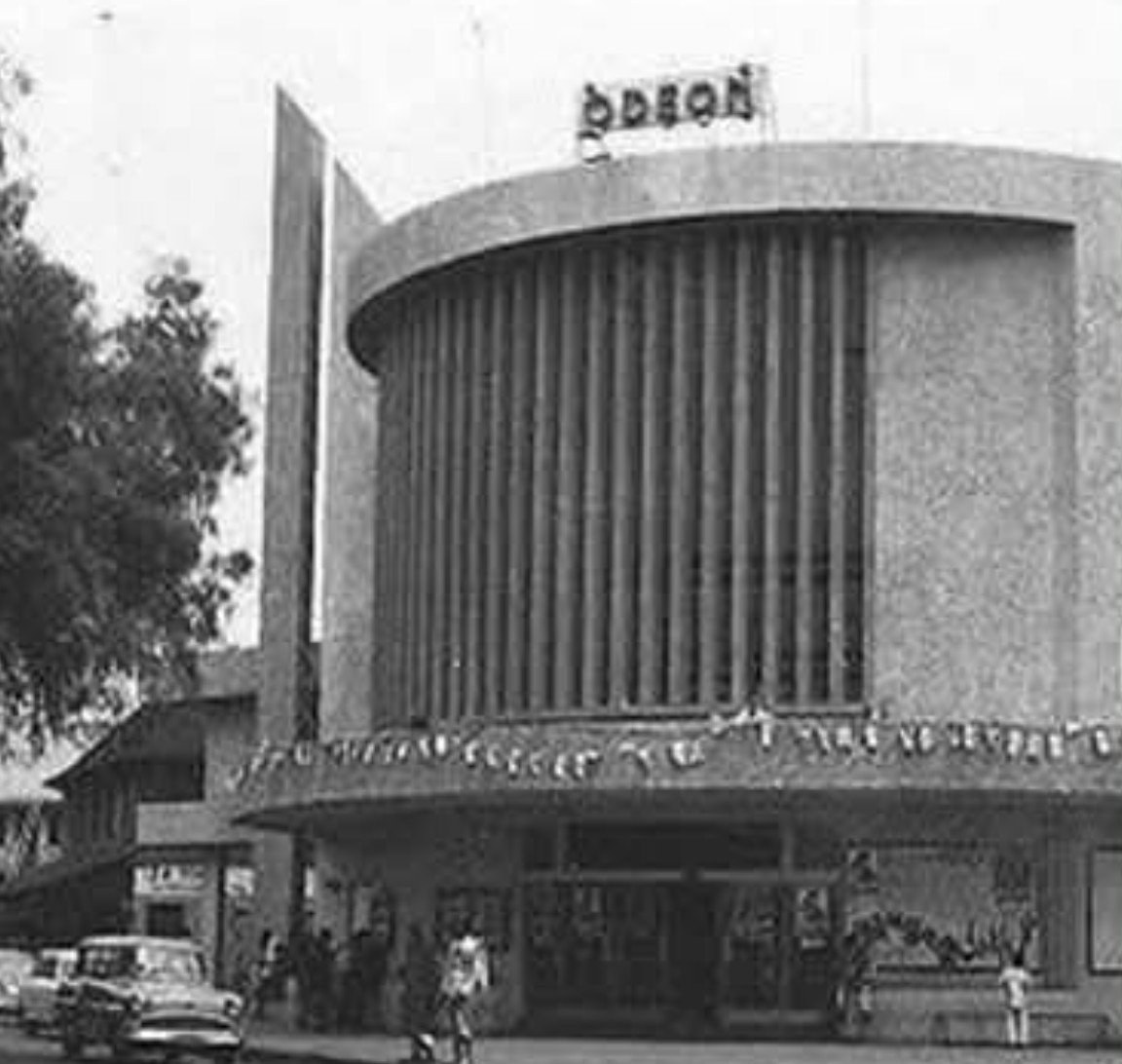
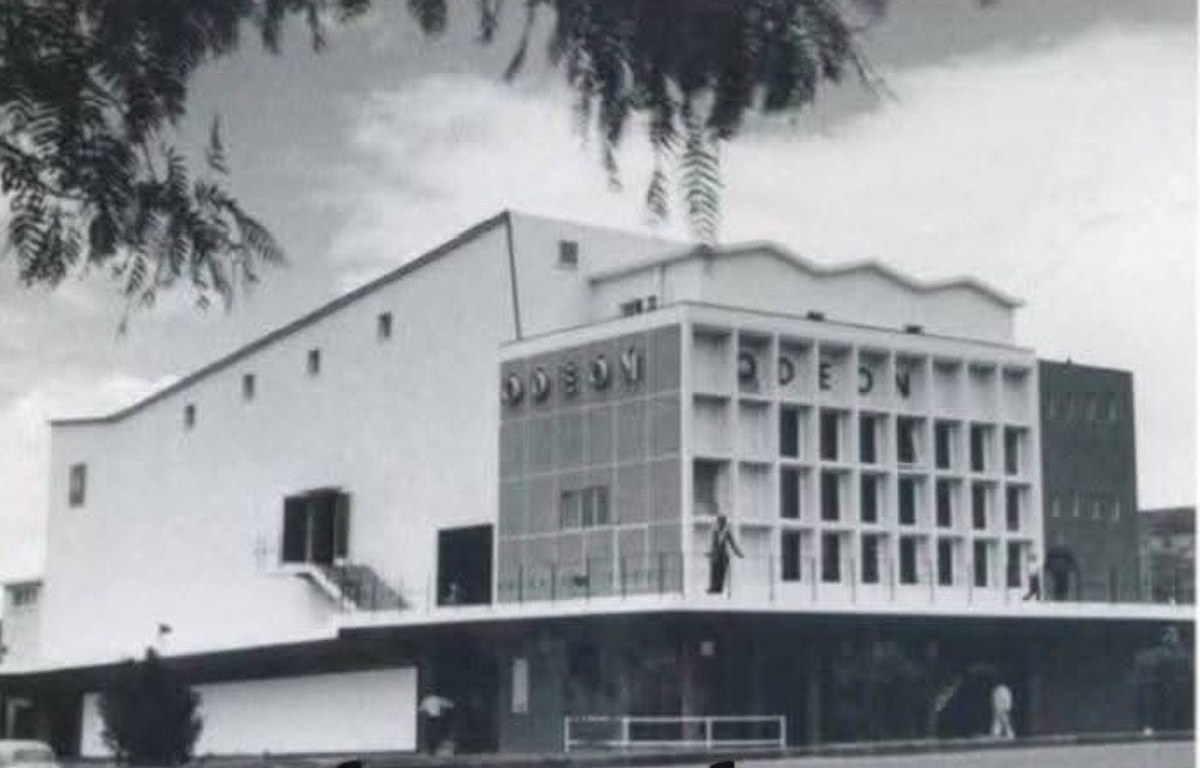
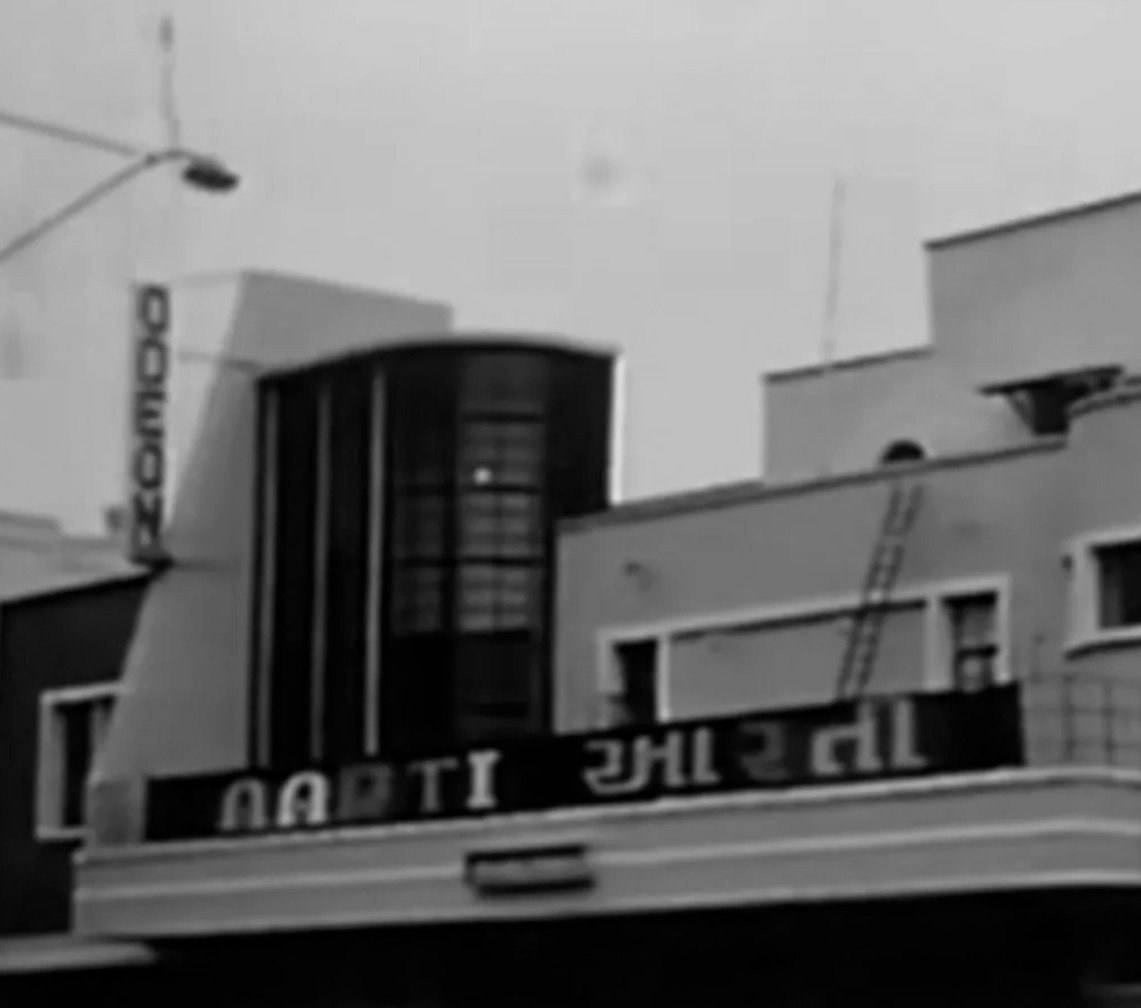
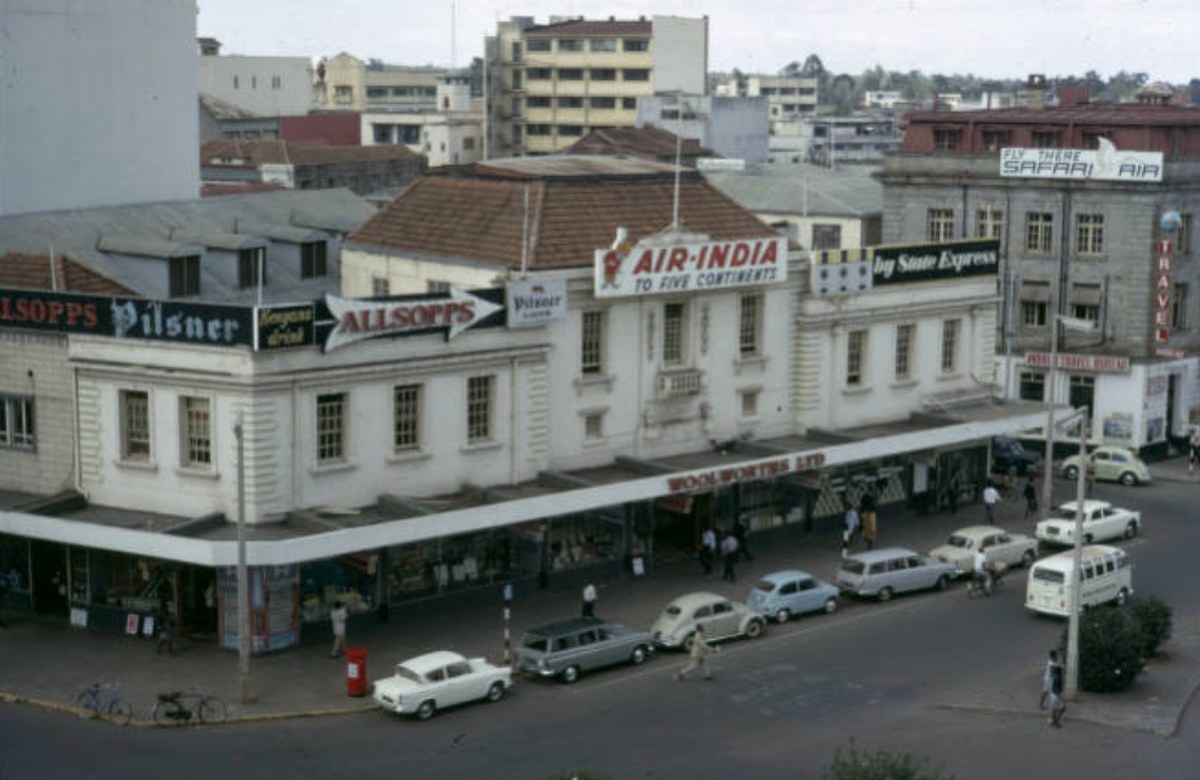
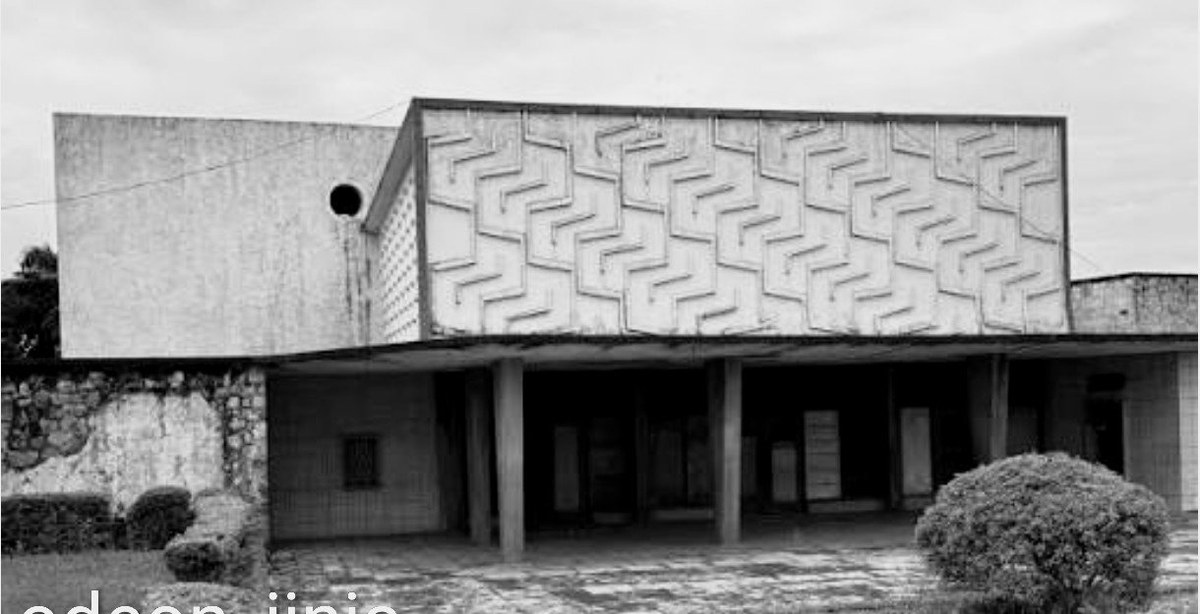
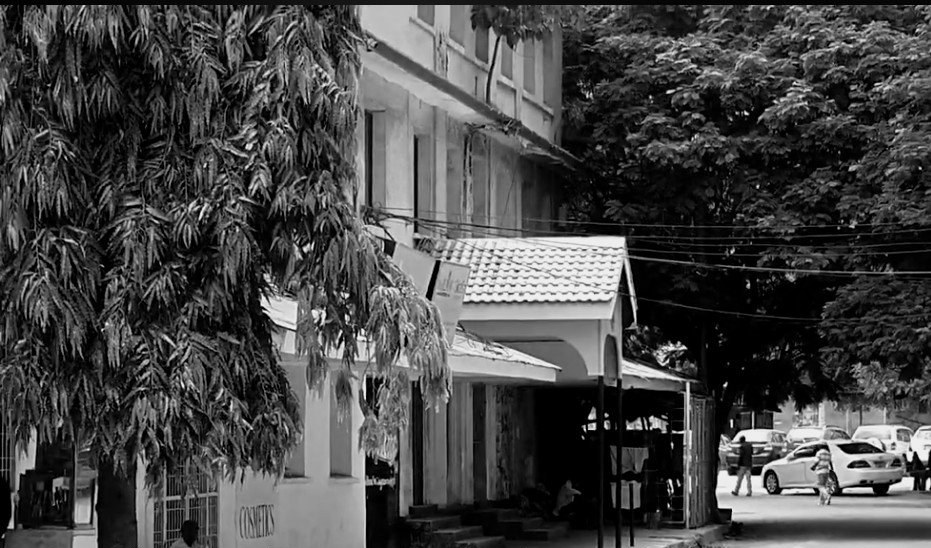
In 1972, Idi Amin expelled the Asian community from Uganda. The Odeon cinemas in Uganda — built one by one across two decades — were gone. Not sold. Not transferred. Taken.
My grandfather was alive to see it.
I was seven years old, sitting on a BOAC plane at Entebbe Airport, carrying a pillow from my bedroom. My grandfather had built an empire from an usher's uniform. My generation left with what we could carry.
The formation reading did not begin with me. It began on a steamer from India, in a cinema in Mombasa, in a man who watched the room rather than the screen.
I am the third generation of this. I just wrote it down.
Entebbe. Monday Night. 1972.
My mother is called Pramila. She doesn't read. So before this book begins — before the doctrine, before the scenes, before forty years of commerce across forty countries — I want to speak directly to her. Because everything in these five scrolls starts with what she did on a Monday night in Uganda when I was seven years old.
But I also want to say something about her that the Entebbe story doesn't contain. Because the Entebbe story makes her a monument, and she is a person. She makes tea in a particular way — she has always made tea in a particular way, with too much milk and then reheated, which is objectively wrong and which she has never once acknowledged as wrong. She laughs before the punchline of a joke, before it arrives, because she has already understood where it is going and cannot wait. She is suspicious of anyone who does not eat properly, which is her primary diagnostic for character: if you leave food on the plate, something is not quite right with you. She has opinions about fabrics. She will tell you, without being asked, exactly what she thinks of the thing you are wearing and whether it suits you. She is the most honest person I know, and the honesty is never cruel and never diplomatic and always completely accurate.
This is the woman who packed gold jewellery into talcum powder bottles. The same woman. The tea and the laugh and the opinions about fabrics and the reading of the immigration officer at Entebbe Airport at 2am — all of it is the same formation. All of it is Pramila.
Idi Amin had expelled the Indians from Uganda. Every Asian family had ninety days to leave. You could take your life. You could not take your wealth. Idi Amin's decree allowed each person to leave with the equivalent of £5 sterling in cash. Five pounds. For a new life in a country you had never seen, with children who had never known cold.
My mother looked at that decree. Then she looked at her gold jewellery. Then she looked at the talcum powder bottles on her dressing table.
She packed the jewellery into the bottles.
That is the first lesson in this book. Not a principle I learned in a boardroom forty years later. A lesson performed in a bedroom in Kampala by a woman who had never heard of strategy, who had no framework for what she was doing, who simply read the formation — Idi Amin controls what he can see; he cannot see inside a talcum powder bottle — and cut through it with complete precision and zero hesitation. The surface layer was the £5 limit and the exit controls. The second stratum was the gap between what the authorities were checking and what they were not checking. The third stratum was the deep structural force: Amin wanted the Indians gone. The whole apparatus of expulsion was, in its way, working in her favour — they were motivated to let people through, not to scrutinise them. She read all three layers simultaneously, in a bedroom, packing for a journey she had never chosen.
She chose Monday night for the flight because she knew the immigration authorities, after a weekend of celebrating their own power, would not check too closely. She dressed her children in warm layers — a British September is not a Ugandan one. She carried five pounds and hidden gold and two boys who understood everything and asked no questions they knew she could not answer.
What I want to tell you about the drive to Entebbe is something I have never fully articulated, because it is one of those memories that sits in the body rather than the mind — felt rather than narrated, present rather than remembered.
Since Idi Amin had taken power, there had been gunshots most nights around Kampala. Not distant. Not occasional. Most nights. The specific sound of a city under a government that had decided violence was an instrument of administration. A seven-year-old who understood everything understood what the gunshots meant. Not abstractly — in the body, in the way children absorb the emotional reality of their environment before they have language for it. The sound had become part of the texture of those months. Normal in the way that things become normal when they happen repeatedly regardless of whether they should.
Entebbe Airport is forty kilometres from Kampala. The road at night, in 1972, in the Uganda of Idi Amin, meant roadblocks. Military. Armed. The specific configuration of power that decides, in the moment, whether you pass or you don't. We drove toward the airport in the dark and hoped. Hoped that Monday meant tired soldiers. Hoped that the formation my mother had read from the bedroom in Kampala extended to the road as well as the airport. Hoped that the momentum of the expulsion — the government's desire to be rid of us — was working in our favour at the roadblocks as well as the immigration desk.
We were not stopped. Monday held.
I carried my pillow with me onto the plane. A child's pillow, from my bedroom in Kampala. I don't know why I took it specifically — I was seven, and it was mine, and it was going where I went. I carried it through the airport. Onto the BOAC plane. Off the plane at Heathrow the next morning. Through the television cameras. Into Feltham. It has been with me in every place I have slept since that night.
I still have that pillow. I still travel with it.
I want to sit with that fact for a moment, because I think it contains something that neither geology nor strategy can fully explain. Every other object from that bedroom in Kampala is gone. Everything Idi Amin's decree said we could not take — the house, the furniture, the business, the accumulated material evidence of a family's life — gone. Fifty-three years of commerce across forty countries, and the one physical object that connects the seven-year-old child on that BOAC plane to the person writing this sentence is a pillow from a bedroom in Kampala.
Pramila packed gold jewellery into talcum powder bottles. Her son packed his pillow. Both of us carrying what mattered most in the containers available to us. Both of us not knowing, in that moment, how long the journey was going to be.
Entebbe Airport was busy. The BOAC plane was full of departing Indians — families like ours, carrying what they could in the containers that were permitted to them. There was no drama at the immigration desk. No raised voices. No hands reaching for the talcum powder bottles. The officials were tired. The formation held. She walked her children onto the plane.
When the plane lifted from the runway and Uganda fell away beneath us, I did not cry. I did not fully understand what was being left behind. I was seven. I was wearing too many clothes. I was holding my pillow. The plane was cold in a way Uganda had never been cold. And my father was not with us.
My father, Hasmukh, had been in Nairobi — his parents' city, the city he had grown up beside — and could not make it to the UK. He would wait there for two years before the family was whole again. He was a businessman. A man who built things with his hands and his intelligence and his willingness to start from nothing when starting from nothing was the only option available. In Nairobi, during those two years, he opened a small consumer chemicals factory. He did not wait passively. He built. While separated from his wife and his sons by an ocean and a government's bureaucracy, he built something. That, I have come to understand, is who he was. The building was not distraction. It was dignity. It was the refusal to be defined by what had been taken.
The reunion happened in Nairobi. His city. The city that had held him for two years while we were in England and he was building his factory and the bureaucracy was slowly, reluctantly deciding to allow his family to become whole again.
I want to sit in that moment for longer than I usually allow myself. Because the panel is right — I have carried it lightly in the telling, when the truth is that it was not light at all.
He was thinner than I remembered. That is the first thing. Not dramatically thinner — not the thinness of suffering — but the thinness of a man who has been eating at a factory and not at a family table. He had a moustache. I don't know why I remember the moustache specifically. Perhaps because it was new. Perhaps because it made him look like someone who had been living a life I had not been part of, which of course he had. When you are nine years old and you have not seen your father for two years, every small change in him is a record of time you were not there.
He held me for a long time. He did not say much. He was not, in general, a man who said much when the important things were happening. He built things instead — chemicals factories, companies, later, after all of it, a life in England that had not been planned for but was made to work. He held me and I held the pillow I had carried from Kampala and for a moment the formation that had been fractured on a Monday night in Uganda was whole again in a city in Kenya with a man who had built a factory while waiting for his sons.
The feeling was not relief, exactly, though relief was there. It was completion. The word I have carried for fifty years is completion. I do not have a better word. Every room I enter in Nairobi carries something of that room. He is in it. He always will be.
He died before this book was written. I walk into rooms in Nairobi and I read the terrain and I close the deals and I think of him building his factory in that city, alone, refusing to be defined by what had been taken. He is the Ground scroll. He always was. I just did not have the language for it until now.
We landed at Heathrow the next morning. There was a phalanx of television cameras. Britain was watching the Ugandan Asian expulsion — watching the families arrive with their five pounds and their hidden gold and their children dressed in too many clothes. My brother and I made the BBC news that night. It was, I have to say, genuinely exciting.

Heathrow Airport, September 1972. A still from the BBC news broadcast.
The author is the child at the rear. That night, from Feltham detention centre, he watched himself arrive.
We had no visas. We were taken to Feltham detention centre. That evening, in the common room, I watched myself on the BBC news broadcast. A fellow detainee recognised me immediately. There was a small commotion of delight. It was fun.
I want to sit with that word for a moment, because it is the most important word in this book. Fun. Not brave. Not traumatic. Not resilient in the way that word gets used to describe people who have been through difficulty and come out the other side. Fun. Because at seven years old, in a detention centre, stateless, separated from my father, newly arrived on a grey island I had never seen — I was genuinely, completely present to the extraordinary nature of what was happening. There was no weight of what had been lost. There was only the aliveness of what was actually occurring.
I did not know it then. I have spent thirty years of Vedantic practice finding the language for it. But the bedrock — the thing that displacement cannot touch, the thing that Idi Amin could not expel, the thing that a detention centre cannot contain — I first found it in Feltham, aged seven, watching myself on television, and finding the whole extraordinary situation simply, genuinely, completely fun.
My mother never talked to me about any of it. The expulsion. The journey. The two years without my father. The things she must have carried that had no container — no talcum powder bottle deep enough, no layer of warm clothing sufficient. We never discussed it. She did her very best. She was, and remains, as strong as nails.
My brother was on that plane. He sat in Feltham with me. He watched the same BBC news broadcast from the same room. He grew up in the same formation, laid by the same parents, on the same ground. Years later, from a university in the UK, he packed two Motorola phones into a suitcase, flew to Hong Kong, lived on a junk boat, and built a million-dollar business before he was twenty-two. He wrote his own book. He built his own world. We each went our own way. But we came from the same place. We were formed by the same hands. The ground your parents lay in the dark does not produce one life. It produces everything that grows from it.
The only time she was weak was when my father died.
I have spent forty years building a discipline for reading what others walk over. This book contains everything I know about that discipline. But I want you — and specifically her, because she doesn't read, so I will speak these words aloud when this book becomes sound — to know where it comes from.
It comes from watching Pramila pack gold jewellery into talcum powder bottles in a bedroom in Kampala, read the formation of a tired immigration desk on a Monday night, and get her children onto a plane to a new life with nothing but five pounds and everything that mattered hidden in plain sight.
She didn't call it strategy. She didn't call it anything. She just did it.
Everything I know about reading the formation, I learned from her. I just didn't know that yet.
The prologue follows. Then the five scrolls. All of it built on ground she laid.
The Room in Nairobi
You know how this ends. Even before I tell you, you know. Because you've been in this room. Maybe not in Nairobi. Maybe in a boardroom in London, or a meeting room in Mumbai, or across a kitchen table with a partner who was losing faith. But you know the specific quality of a room where everything depends on the next five minutes, and you are the only person who can see what's actually happening beneath the surface of the conversation.
Here is the room. Fourteenth floor, Nairobi, 1999. The air conditioning is set too cold — it always is in rooms where the person who controls the thermostat also controls the outcome of the meeting. Five people across the table. My competitor has been in this market four years. I have been here four months. They have a local office, a local team, a track record. I have the product, the price, and three weeks of reading this account in a way that nobody in that room knows I've done.
The procurement director opens. He describes what they're looking for. He's accurate. He's also describing the surface — the written specification, the stated requirement. What he hasn't described is what I already know: the technical lead on his left backed a different vendor internally months ago. Her credibility is committed to that recommendation. The procurement director is managing a room where two directions are pulling against each other, and his real objective today is not to find the best product. It's to find the outcome that holds internally.
Those are different objectives. The gap between them is the only opening I have.
I don't lead with the product. I don't lead with the price. I lead with the technical lead's unspoken concern — named directly, without disguise, with a resolution that requires no advocacy on her part. I give her the answer to the problem she hasn't raised yet. Her position isn't reversed. It's updated. She can carry that update back to her own room and present it as her own evolution of thinking. Her credibility stays intact.
At minute thirty-eight, the procurement director asks one question. Not about whether to proceed. About how.
That question is the close.
I drive back through the midday traffic. The city is the same city it was two hours ago. I haven't outargued anyone, outpriced anyone, or outcharmed anyone.
I read the formation. I found the angle. I cut.
Everything in this book comes from that room. Not that specific room — from several hundred rooms like it, across forty countries and forty years, where the same discipline produced different specific outcomes but the same underlying truth: the world is always three layers deep, and the only thing that ever determines any significant outcome is the gap between what's visible at the surface and what's actually driving everything below it.
The beautiful thing — the thing I most want you to know before you turn to the first scroll — is that the reading of that gap is a skill. It can be developed. It can be learned. By anyone willing to do the work of it, regardless of background, regardless of geography, regardless of how long they've been walking over the terrain without knowing it could be read.
I've spent forty years developing this skill. The five scrolls that follow are every essential thing I know about it.
Read slowly. The rock took a long time to form.
But it is solid. And it is yours to stand on.
The Whole Thing in One Place
The world is always three layers deep. You are almost always reading only one — and that is not a failure. It is simply where every journey begins.
The surface changes constantly. The deep structure moves once a generation. Build on the deep structure and the surface will take care of itself.
Water takes the shape of the container without becoming the container. That is not adaptation. That is mastery — and it is available to everyone.
The negotiation is decided before anyone sits down. The table is simply where the result is announced.
Every framework is a map drawn before you arrived. The territory contains wonders — and dangers — the map has never seen.
Complete commitment produces a quality of energy that partial commitment cannot. When you decide fully, paths appear that hesitation never reveals.
Your emotional pattern under pressure is not a character flaw. It is data — and data, once mapped, becomes the foundation of something better.
Category creation defeats market share competition permanently. You cannot lose a race to someone running a different race entirely.
What you are at the deepest layer is untouched by any commercial outcome. This is not consolation. It is the most powerful foundation a life can be built on — and it is already yours.
Nine principles. Five scrolls. One cut. Read on.
The Writing at the Edge of the Ocean
I should tell you how I ended up a geochemist. Because the honest answer is more instructive than the version I might have offered at a dinner party.
At school my favourite subjects were chemistry and geography. When I saw a course called Geochemistry advertised at Queen Mary College, University of London, I applied immediately. It seemed obvious — a fusion of the two things I was best at. I got in. I was pleased with myself.
The very first lecture, Dr French stood at the front of the room and began talking about a mineral called hornblende.
It dawned on me, somewhere in the first ten minutes, that geochemistry was about rocks. And things in rocks. And the chemistry of rocks and things. This was not the fusion of chemistry and geography I had imagined. I had completely misread the formation of the course before I applied to it.
I stayed. It would have been deeply foolish to admit I had fucked up my choice of subject in week one. So I committed. Completely. Without reservation. And because I committed completely, something happened that partial commitment never produces: I excelled. A student. Prizes. A scholarship to study an MSc in Canada — and while in Canada, a further scholarship to enter a PhD programme in Australia. I dropped the MSc, saved a year, and moved to Australia. The Drapers' Prize at Queen Mary. Built entirely on a course I chose because I misunderstood what it was.
The course turned out to be exactly right — not for the reasons I thought when I applied, but because geochemistry is the reading of complex layered systems. The reconstruction of invisible histories from visible evidence. The discipline of knowing what forces were acting when all you have is what they left behind. I have been doing that ever since. In Uganda, Nigeria, Johannesburg, Nairobi, Washington, Mauritius.
Dr French and hornblende gave me the method. I just didn't know it yet.
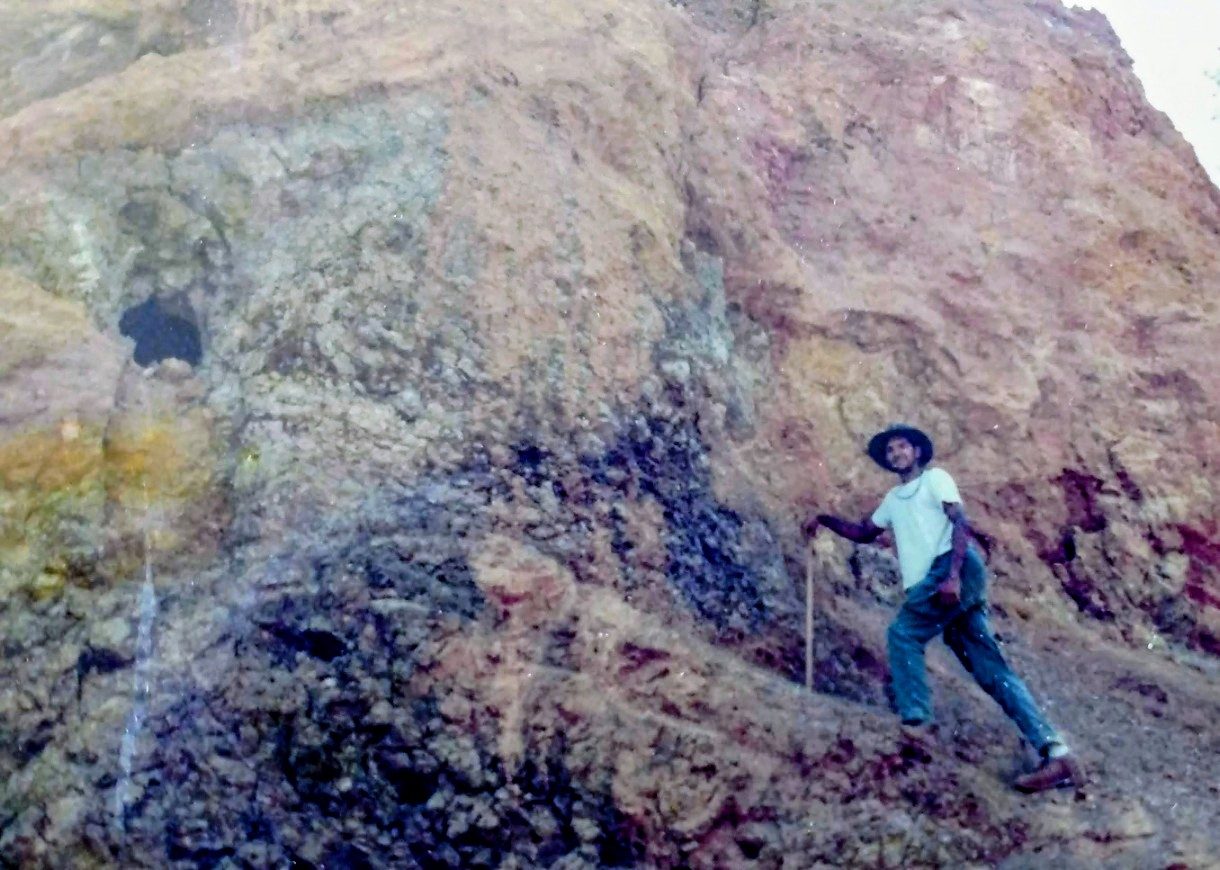
Cyprus, early 1980s. Studying the geology around a copper mine —
the entrance to an ancient Roman mining shaft. The formation reader, learning to read formations.
I have carried rock in my hands since I was twenty years old. Literally. I crouched in quarries in Canada and mapped fault lines in Australia, learning to read the earth's history in compressed, visible layers. A geologist doesn't see a cliff face. She sees time made solid — the record of forces that acted without witnesses, reconstructed entirely from what remains.
That was the first discipline I ever mastered. I never left it. Not even as I crossed into commerce, into Africa, into the world of deals and people and nations that has consumed the better part of my adult life. The method transferred. Because the method was never really about rock.
It was about reading what others walk over.
I write this on the island of Mauritius, at the edge of the Indian Ocean, where the trade winds come off water that has no memory of anything. I've done business across forty countries, negotiated in four languages, built companies from nothing and watched others fold. I've held a nation's diplomatic file in one hand and a coffee origin deal in the other. I've been the distributor, the director, the founder, the consul, the chairman — and more often than I'd admit in any room I was trying to impress, the person who made a costly error and had to read their way back to solid ground.
Times are hard right now. And I mean genuinely hard — not "challenging quarter" hard, not "headwinds" hard. Hard. The kind where you wake up at 3am and think: what the fuck am I doing. I want to acknowledge that directly, because this book was written for exactly this moment — not the comfortable one, the difficult one. Markets are uncertain. Technology is moving faster than most organisations can absorb. The old maps of how commerce works are being redrawn. Many people I know and respect are carrying weight they don't talk about publicly: the quarter that didn't work, the partnership that fractured, the venture that needed one more year of patience than the capital allowed.
If any of that is you right now: this book is for you. Specifically for you.
Robert Greene's The 48 Laws of Power · Miyamoto Musashi's The Book of Five Rings · Nassim Taleb's The Black Swan — you will find this book speaks your language. It is not a management manual. It is a way of seeing, built from a life in which seeing correctly was the only option.
For readers of Taleb's Anti-Fragile: the Void scroll is the inner architecture of the operator who thrives in disorder — not because they are indifferent to outcome, but because their identity is not located there.
The Immigrant's Superpower.
The ability to read a terrain because you weren't born into it. No inherited assumptions about how it works. No established position to protect. No comfort zone that prevents you from seeing what is actually there. The person who had their ground removed learns to read ground differently from the person who has always stood on the same earth. I was expelled from my country of birth at seven years old. Every terrain since then has been foreign terrain. Every room has been a room I had to read from the beginning. That is not a disadvantage. It is the foundation of everything in this book.
But the immigrant is only the most visible version of this condition. Every CEO entering an unfamiliar industry, every M&A lawyer in a hostile boardroom, every founder in a room of sceptical investors — each is stateless in that moment. Each has had the ground removed. Each must read the terrain from first principles rather than inherited assumption. The outsider advantage is not an immigrant's privilege. It belongs to anyone who has ever been the only person in a room who had to earn their place in it by seeing clearly — rather than by arriving already inside it.
What I've learned doesn't live in a business school. Business schools teach the past, dressed as the future. What I've learned lives in terrain — in sitting across a table in Kigali at midnight, reading the face of someone deciding whether to trust me, knowing from the quality of their silence exactly what they've decided before their lips have moved. That is strategy. Not frameworks. Not slide decks. Strategy is what happens in the body before the mind catches up.
When I first read Miyamoto Musashi's Book of Five Rings, I was young and in a suit, learning to sell technology across a continent most of my colleagues refused to visit. What struck me wasn't the martial philosophy. It was the epistemology — his specific way of knowing. Musashi wasn't interested in rules. He was interested in principles so fundamental they could generate the right rule for any situation. He taught a way of seeing, not a way of doing. That's what I've been trying to build commercially ever since.
This book stands in that tradition — not as imitation but as continuation. Sun Tzu read the terrain of war. Musashi read the terrain of the duel. This book reads the terrain of the room where everything is decided before anyone sits down. The geography is different. The discipline is identical.
The cut — the diagonal slash through the strata — is the act of reading all three simultaneously.
The Stratum Mark is my symbol. Three slightly irregular horizontal lines, cut by a single heavy diagonal slash. Hand-drawn, deliberately imperfect — because no genuine reading of anything is perfectly straight. The lines are the layers. The slash is the act of reading.
Three rock layers, one cut. He reads what others walk over.
Now. Here is what I need you to understand before the first scroll begins — the thing I most want to land before anything else.
You are more capable of this than you know.
Not as aspiration. As fact. The discipline in these pages was developed across Africa and the Indian Ocean, in four languages, across every conceivable cultural and commercial context. But I want to be direct about something before you go further: the terrain in this book is African because that is where I operated. It is not African because the method is African.
The physics of the markets in these pages — high uncertainty, relationship-driven commerce, incomplete information, rapid and unpredictable change — are not uniquely African conditions. They are the operating conditions of every emerging sector, every disrupted industry, every startup market, anywhere on earth. Silicon Valley is an emerging market with better coffee. The entrepreneur in Chicago navigating a neighbourhood that the big players have abandoned is reading the same formation as the trader in Kinshasa. The sales director at a mid-market firm in Manchester trying to close a deal without losing margin is in the same room as the Motorola distributor in Lagos deciding whether to bluff.
The terrain differs. The method is identical.
Africa is where I learned it because Africa is where the conditions were most unforgiving and therefore most instructive. Where there is no safety net, the reading has to be right. Where the margin for error is zero, the discipline sharpens fastest. I did not choose Africa as a laboratory. It was my life. But what the life produced transfers completely — to any market, any deal, any room, anywhere in the world where humans are deciding whether to trust each other and whether the risk is worth the return.
Read this book in Chicago, in Singapore, in São Paulo, in Dubai. The names of the cities in the stories will be different from yours. The formations will not be.
One more thing before the first scroll begins. This book operates in two registers and I want to name that directly rather than pretend it doesn't.
One register is practical: the pre-meeting checklist, the three-question protocol, the post-mortem borehole table, the architecture of the irresistible offer. These tools work immediately. You can take them into a meeting tomorrow and use them. If that is what you came for, take them. They are real and they are yours.
The other register is interior: the spiritual practice, the bedrock, the non-attachment, the thirty years of sitting quietly with the most fundamental question. If that is unfamiliar territory, or if it feels incompatible with the commercial life you are living, that is completely fine. You do not need to accept it to use the first register. The checklist does not require you to meditate. The borehole table does not require a teacher. Take what serves you and leave the rest on the page.
My honest view — stated once, not argued throughout — is that the second register is the source of the first. That the checklist works best in the hands of someone who has done the interior work, because the interior work is what makes genuine curiosity possible and genuine curiosity is what the checklist is designed to structure. But I am aware that not every reader will arrive at this book from the same place, and I have no interest in requiring a conversion before the tools are available. Use what you can use. Grow into the rest if and when it calls you.
You will encounter the full argument for the interior register in the Fifth Scroll. It is argued there — mechanism stated, logic laid out — not merely asserted. The Feltham detention centre is where it begins, in a seven-year-old boy watching himself on the BBC news and finding the whole extraordinary situation simply, genuinely, completely fun. That word — fun — is the earliest evidence of the bedrock this book is built on. Arrive at the Void scroll with that word in mind.
Read slowly. But don't stop. Every scroll builds on the one before it. The book is designed to be read in a single sitting — not because it's short, but because each scroll opens something the next scroll completes. If you put it down between Ground and Water, you'll feel it. The loop won't close.
Stay with it. What you'll find at the end will be worth the sitting.
Ground
There were two of us preparing for the same ministry meeting in the same week. My colleague spent those days refining the deck — sharpening the pricing table, tightening the product comparison, rehearsing every anticipated objection. It was good work. Professional, thorough.
I spent the week differently. I found the three people who knew the ministry from the outside — a former advisor, a supplier to an adjacent department, someone who had lost a bid there the previous year. I bought each of them a meal. I listened for twice as long as I spoke. By Thursday I understood something that no briefing document contained: the real decision was not going to be made in the room where we were presenting. It had already been made, informally, between two people whose relationship nobody was discussing openly.
We walked in on Friday. My colleague presented. I waited for the specific moment when the room's energy shifted from formal evaluation to something more personal — and then I said one thing. Directly to the tension nobody else was naming. Gently. The way you'd acknowledge something you'd noticed and were willing to address.
The meeting ended well. My colleague thought it was the deck.
I knew it was the reading. And I knew, in that moment, that the reading was something I needed to learn to teach.
Let me ask you something before we begin. Not rhetorically — actually ask it, because your honest answer to it will change the way you read everything that follows.
When was the last time you walked into a room and knew — not suspected, not hoped, but knew — exactly what was happening beneath the surface of the conversation?
If the answer is recent, and the knowing was useful, you already understand the Ground principle at the level of instinct. This scroll will give you the language for what you're already doing, so you can do it intentionally, consistently, under pressure, in unfamiliar terrain.
If the answer is rarely or never — this scroll will change that. Not immediately. Across weeks of applying what's here. But it will change it, and when it does, you'll look back at rooms you sat in before and see them entirely differently. That seeing is irreversible. Nobody goes back to reading only the surface once they know how to read the formation.
A geologist doesn't see a cliff face. She reads events. Each layer of strata is the record of a moment when forces — heat, pressure, chemistry, time — were in a specific relationship to each other. The rock is the evidence. To hold a sample and know what kind of sea formed it, what fire drove through it, what weight compressed it over millions of years — that's not knowledge of the past. That's a method of seeing that transfers to any system. Markets, organisations, negotiations, governments. People. Everything leaves strata. The strategist's job is to read them, and to do so without flinching from what they reveal.
The greatest gift this discipline ever gave me was the disappearance of confusion. I stopped feeling bewildered by markets and negotiations because I stopped looking only at the surface. When you know there are three layers, you know where to look. That clarity alone — before you've even done the reading — changes everything.
I want to add something here — a scene from before any of this doctrine existed, before Uganda, before Motorola, before any of the commercial formation this book describes had been built. Because the instinct that underlies all of it was present long before I had language for it, and the honest origin of this book is not in a boardroom or a mining area. It is, in part, on a park bench in Gibraltar in 1985.
I was studying geochemistry at Queen Mary, University of London. My brother and a friend decided to travel to Tangiers in Morocco — the idea being to buy cheap leather goods and bring them back to sell to fellow students at Hull University for a profit. I tagged along. Not for the trade. For the experience. The same instinct that would later walk out of Khartoum airport to have a look — something interesting is happening, let's go see what it is.
We bought the leather goods in Tangiers. We began the return journey. Somewhere in Gibraltar, we ran out of money entirely.
We slept on a park bench. We approached the police and asked if they could take us in for the night. They explained, with presumably some bewilderment, that they could not detain us as we had committed no crime. Which was true and unhelpful in equal measure. We spent the night on the bench.
We got home. The leather goods were sold. The trade worked.
I tell this story in the Ground scroll because it contains, in its simplest possible form, every principle this scroll is built on. Read the terrain — Tangiers has cheap leather, Hull has students with disposable income, the gap between them is the trade. Execute with complete commitment — get on the bus, buy the goods, sleep on the bench if necessary, get home. And maintain genuine equanimity about the circumstances — a park bench in Gibraltar is simply where you sleep when Gibraltar is where you are and a bed is not available. No drama. Nice times.
My brother went on from that Tangiers trip to pack two Motorola phones into a suitcase, fly to Hong Kong, live on a junk boat, and build a million-dollar business before he was twenty-two. The arc from Moroccan leather goods to Hong Kong phones to a million dollars is the same instinct, applied with increasing precision and scale. He read the formation. He executed. He slept wherever he needed to sleep.
The formation of the strategist begins earlier than the strategy. It begins when you tag along on a trip to Tangiers because something interesting is happening and you want to see what it is. Everything after that is application.
And sometimes the application arrives in a form nobody would predict. Including you.
In Australia, during the doctoral years (I started mine aged 21), I read about an options trader in the London markets who made and lost annual salaries worth of money in a single day. It intrigued me.
That is how I describe most of the significant decisions in my commercial life: it intrigued me. Not calculated. Not strategically assessed. Intrigued. The formation reader's instinct — something is happening here that I don't yet understand, and the gap between what I see and what I understand is where the interesting thing lives.
I taught myself options trading. I read every page of every financial newspaper available in Australia. I learnt about markets — how they moved, what drove them, the relationship between the surface volatility of price and the deeper structural forces that actually determined direction. Then I opened an account with an Adelaide-based brokerage. My brokers were Lindsay and Terrence. I began placing trades on US markets, taking advantage of the time zone differential so the activity wouldn't interfere with the geology. No impact on studies. No sleep either.
My first trade was options on oil futures. Then sugar — World 11. Then the Australian dollar against the US dollar. I made money. A few thousand dollars, which to a student with no money is a fortune, and anyone who tells you otherwise has never been a student with no money. I became, by the standards of doctoral students in Australia in the late 1980s, fairly well off.
I set up an investment fund with fellow students — pooling funds, placing collective trades, running an informal investment vehicle out of a geology department in South Australia. And something happened that I found quietly satisfying at the time and have found increasingly instructive ever since.
The professors heard about it. They saw me reading financial literature between lectures. They found out about the fund. And these people — men and women who had spent their careers reading the deep structural forces of the earth, who understood better than almost anyone alive the relationship between deep formation and surface event — began queuing to read the financial newspapers. Asking questions. Wanting to understand.
I want to be precise about why this is instructive rather than merely amusing. The professors understood geology perfectly. They had spent decades developing the ability to read layered systems — to look at compressed evidence and reconstruct the forces that produced it. That is identical, at the level of method, to reading a commodity market. The data is different. The discipline of reading the formation beneath the surface volatility is the same.
They had the method. They had never applied it to this terrain. The student had applied it to this terrain before he fully understood that the method was transferable. That gap — between the person who has the method and doesn't know it applies everywhere, and the person who has found a new terrain to apply it to — is where the commercial advantage always lives.
When I left Australia, I closed the account. The geological career was going in a different direction. But the insight from Australia — that reading the formation beneath any system's surface volatility is the same discipline, applied to different data — has never left me. It is, in many ways, the earliest version of everything in this book.
Lindsay and Terrence at the Adelaide brokerage. Oil futures. Sugar World 11. The professors and their financial newspapers. The formation was always readable. You just have to know that's what you're doing.
And sometimes you have to start at the base layer before you can build anything above it. In January 1996, having returned from Puttaparthi, having lost the minerals business, having cleaned factories and burned letters and clasped the feet of a teacher in southern India, I got a job at Motorola. In their warehouse. Packing two-way radios into boxes.
The product I would spend the next decade selling across forty countries in Africa — building the business from zero to fifty million dollars as a small team — I first held in my hands on a packing line in England in January 1996. I knew its weight before I knew its market. I knew how it was packaged before I knew who would use it. The ground level, literally. Every formation begins there.
A year later I was travelling business class and earning good money as Business Development Manager for Africa. My colleagues in the warehouse couldn't believe it. They were reading the surface layer — the packer who had been standing next to them one year ago. What they couldn't see was what had happened in between: Puttaparthi, the blur, the materialised ash, the second dream, the job offer. The formation that produced the Business Development Manager was invisible to them because it had assembled itself in southern India and in the front right pocket of a pair of trousers.
You read what others walk over. Sometimes they are walking over you.
Here is something most strategy books don't tell you: the most important ground to read first is the ground you're standing on. Not the market. Not the competition. You.
Not your ambitions — your actual capabilities. Not your résumé — your real track record, including the things you've edited out of the version you tell at dinner. And not the bullshit story you've been telling yourself about why things didn't work out. Not your self-criticism — that's just a different kind of distortion. The precise, dispassionate inventory of what you have, what you can do, what costs you, and what you consistently need help with.
I've run this inventory for thirty years. It is, without question, the single practice that has most improved my commercial performance. Not because it reveals weakness — though it does that too — but because it reveals genuine strength at a level of specificity that most people never reach. Most people know their general competencies. Very few know their actual unfair advantages. The gap between those two things is the gap between competing and winning.
General competencies are table stakes. Every warm body in your field has general competencies. What do you have that a well-resourced competitor cannot replicate in eighteen months? For me: four decades of personal relationships across forty African nations, built through the discipline of showing up consistently in markets most outsiders abandoned when they became inconvenient. A diplomatic credential that opens doors capital cannot buy. A scientific training in reading complex layered systems that produces a different pattern of perception than commercially trained peers. A thirty-year inner practice that eliminates panic in conditions that destabilise other operators. A track record in a specific category — B2B device rental — that is singular. We built it from nothing, in a market that didn't know it needed the category.
Your equivalent exists. It will not look like mine. It will be specific to your specific combination of experience, position, and history. But it exists. Finding it — naming it precisely — is the first and most important piece of work this scroll asks you to do.
Every person has one pattern that, under sufficient pressure, works against their own intelligence. The urgency that moves too fast. The approval-seeking that softens a correct position. The perfectionism that never ships. Mine is impatience. I see the path and want to be at the destination before I've fully walked it. I've burned good ground — genuinely good ground — by moving before the moment was ready.
Here is what nobody says about emotional patterns: knowing yours is not a limitation. It is a superpower. The operator who names their pattern and builds systems around it is operating at a level that those who pretend they have no such pattern can never reach. The map of your limitation is the map of your next upgrade. Both of them.
Remove the narrative. Remove the strategic framing. Remove the lessons learned. What does the raw sequence of your wins and losses demonstrate you can do — and what does it demonstrate you consistently struggle to do without support? Both findings are equally valuable. The strengths tell you where to position. The gaps tell you who to build your team around. That combination — precisely known — is both your next strategy and your next hire brief, simultaneously.
Most people think in quarters. Some think in years. The strategist thinks in decades while acting in days — and this is not a contradiction, it's the most demanding discipline in commerce. My plays in Rwanda are thirty-year plays. The biomethane infrastructure I'm originating from Lake Kivu is irrelevant to this year's P&L. It's foundational to the data economy of the African continent in 2050. Holding that long view doesn't mean ignoring the present. It means every present action is placed in a context that gives it meaning — and gives you, in the difficult quarters, a reason to keep moving that no short-term result can take away from you.
I want to give you a model so simple that by the end of this chapter you'll be applying it automatically to every room you walk into. Not because it's simplistic — it isn't — but because the complexity lives inside each layer, not in the structure itself. The structure is elegant precisely because it doesn't change.
The surface layer is what newcomers see: prices, news, visible competitors, what gets discussed at conferences. Real, but not deep. This layer changes constantly, tells you almost nothing about the underlying structure, and is what most commercial education prepares you to read. If your strategy is built primarily here, you're building on topsoil. The first strong season will reveal the foundation beneath it.
The second stratum is the established interests. The people who shaped the market's regulations, its customs, its informal rules. They don't appear in the trade press because they don't need to. They were in the room when the rules were written. They know the minister by her first name. They have the long relationship with the bank that finances everything. To enter any market without mapping these people — who they are, what they're protecting, how they exercise their influence — is to walk into resistance you didn't know was coming. Map them first, and what felt opaque becomes navigable. Almost always, the people you feared were obstacles become, with the right approach at the right moment, the most valuable relationships in the ecosystem.
The third stratum is the deep structural forces. Demographics. Capital flows. Technology curves. Geopolitical tectonic shifts. These move slowly — decades, not years — but they determine everything above them. The operator who reads this layer can position themselves years ahead of the moment when the opportunity becomes obvious to everyone else. And being early at the structural level is the only positioning that compounds without diminishing. Market share leadership can be overtaken. A structural position, built before the structure is visible, cannot.
"The surface changes constantly. The deep structure moves once a generation. Position on the deep structure. Let the surface take care of itself."
Run these before any meeting that matters. Not as a ritual — as a genuine inquiry. The answers change what you notice once you're in the room.
When a situation feels complex or stuck, these three questions locate the diagonal slash — the point where the layers are exposed and the real conversation becomes possible.
The cut is the moment you speak from the third question into the second. You align the macro force with the personal stake — and the surface resolves.
After the immigration counter at Ndjili Airport, our local contact had arranged for someone to be waiting for us. We were to hand our passports to this person. He would handle luggage collection, customs clearance, and delivery of everything — passports included — to our hotel. The alternative was several hours at the airport and several dollars lighter. We handed our passports to a stranger and walked out of the terminal. They arrived at the hotel before we did.
That act — handing your passport to someone you have never met, in a country where institutional trust is essentially zero, on the instruction of a partner you are still evaluating — is either recklessness or formation reading. It was formation reading. The specific quality of the instruction, the specificity of the arrangement, the fact that it had been pre-arranged rather than improvised at the airport — all of it communicated the reliability of the source. The formation of the instruction was trustworthy even in a context where trust is the rarest commodity available. We read it correctly. The passports came to the hotel.
Kinshasa in 2007. Let me say what it was, honestly, without the diplomatic softening that most accounts apply when describing places that have been failed by their own governance.
Its own residents have a name for it: Le Poubelle — the dustbin. Even the people who live there call it that, and I am not going to improve on their word or soften it. Dirty, broken, worn down — the infrastructure of a city that had once been something — Léopoldville, the colonial capital, with the bones of a functioning urban environment still visible beneath the surface — now degraded by decades of extraction, neglect, and the specific kind of destruction that happens when the people responsible for a formation decide to mine it rather than build on it. That name — Poubelle — carries a grief that no outsider's description can approach. Which is why I use theirs, not mine.
I felt for the people. That is not a diplomatic statement. There was a sense of hopelessness in the air — the specific, heavy quality of hopelessness that comes not from poverty alone but from the knowledge that the poverty is not natural, that the ground you are standing on is rich, that the things that have been taken from this place and from these people have made other people elsewhere extraordinarily wealthy. That is a different weight from ordinary poverty. It is the weight of knowing what should have been possible.
We found our local partner. We eventually did a deal. He was a capable, resourceful operator who had built something real in conditions that would have ended most commercial ventures before they began. He told us his story: he had been wiped out by looters every time there was a period of insecurity in the country. Which was regular. Everything rebuilt. Everything taken. Everything rebuilt again from nothing.
And then he said the thing I have never forgotten: he wouldn't have survived in any other country except there.
I want to sit with that sentence because it contains the most extreme version of the Ground scroll's core principle I have ever encountered. Standing where the leverage lives means understanding which specific terrain your specific formation is calibrated for. Our partner had been calibrated by Kinshasa — by its specific chaos, its specific rhythms of instability, its specific requirements for survival, its specific unofficial networks and mechanisms for operating when the formal systems are absent or hostile. He understood this formation so completely, had been tested by it so repeatedly, had rebuilt within it so many times, that he had become precisely and exclusively suited to it.
In London or Nairobi or Johannesburg, his specific capabilities would have been worth far less. The resilience that Kinshasa had built in him — the hard-won knowledge of how to operate when everything collapses and then operate again when it collapses again — is not transferable to environments where collapse is not the operating condition. His leverage lived in Kinshasa. Kinshasa was the only terrain where everything he had suffered and learned and rebuilt was a competitive advantage rather than simply a survival story.
That is not a consolation. I am not romanticising what was done to that city and those people by the governance structures that failed them. But within the formation that existed — however wrong its causes — our partner had read it more completely and more honestly than almost anyone I have met in forty years of commerce across forty countries. He knew his ground. He stood on it. He built on it. He was wiped out. He built again.
The three-layer model describes how formations work when they are functioning. Kinshasa is the example of what the model reveals when a formation has been systematically stripped — when the deep structural forces have been extracted for the benefit of interests that are not the formation's own. The surface layer is chaos. The second stratum is capture — institutions converted into extraction mechanisms. The third stratum is a resource base so extraordinary that the extraction has continued for generations without exhausting it, which is both the country's curse and the reason the extraction never stops.
Read the formation honestly. Including when the honest reading is that the formation has been failed by the people who should have built on it.
Le Poubelle. The passports at the hotel. The deal done. The man who wouldn't have survived anywhere else. I have never forgotten any of it.
I want to spend time on this. Not because it's theoretical — because it's the single most consequential strategic move available to any operator, in any market, at any scale, and most people never attempt it because they're too focused on winning the game that's already being played.
Category creation is the decision to define the game instead of playing it.
When you enter a market before the category you're creating is visible — before competitors recognise it as a category worth entering — you define that category in your own image. Every person who comes after you arrives as an alternative to you. You are not an alternative to anyone. You are the standard against which everything else is measured. That is not a market leadership position. It is a different kind of position entirely, and it compounds differently, and it is far more durable.
When we launched Kadadak — our B2B device rental business in Mauritius — the category didn't exist as a structured commercial proposition. Companies bought their technology assets, amortised them, and replaced them when they were broken or embarrassingly obsolete. We introduced a different idea: rent operational technology the way you rent property — with a service wrapper, predictable monthly costs, zero capital outlay, complete flexibility. We didn't enter a market. We built one. The clients who came first weren't switching from a competitor. They were adopting a new paradigm that we introduced and made safe for them.
Kadadak serves B2B customers of every size across the island — small enterprises equipping a first office, medium-sized operations scaling their teams, large corporates managing hundreds of devices across multiple sites. The product range is deliberately comprehensive: smartphones, laptops, tablets, desktop PCs, servers, point-of-sale devices, factory line equipment, office furniture. If a business needs it to operate, Kadadak rents it. We also operate a buy-back-to-rent model — acquiring existing assets from companies and converting their sunk capital into a flexible monthly arrangement, immediately improving their balance sheet and putting the asset management burden where it belongs: with us.
What makes this position genuinely unassailable is the integrated device lifecycle model. We don't rent equipment and disappear. We manage every stage of the asset's life inside the client's business — supply, deployment, active management, refresh, and replacement. No competitor holds this full position. A vendor can supply. A leasing company can finance. An IT firm can manage. We do all of it, as a single integrated proposition, under a single monthly fee. The client's technology infrastructure becomes our responsibility, permanently, for as long as they operate. That is not a service. It is a structural dependency — and it is built through genuine value delivered consistently, not through lock-in clauses.
The result, held across every economic cycle, every technology shift, every leadership change: zero churn. Not low churn. Zero. This is not conventional customer loyalty. It is category dependency. They depend on the category, and we are the category.
Mauritius is where the model was built and proven over three years of operation. The model — category creation, full lifecycle ownership, direct B2B relationships across every enterprise size — is designed to travel. From the island, we take it into continental Africa: markets of tens of millions of businesses that buy technology they cannot afford to buy, that maintain assets they cannot afford to maintain, that replace equipment they cannot afford to replace. The rental model solves all three problems simultaneously. Every African market where those problems exist is a market where Kadadak belongs.
The practical question to ask about any venture you're considering: can I create this category, or am I entering a category that already exists? If the answer to the first question is yes, the second question becomes almost irrelevant. You cannot lose a race to someone running a different race entirely.
You don't need to compete everywhere. This is one of the most liberating strategic discoveries available to any person, at any stage of a career, and most people never fully receive it because the commercial culture they operate in rewards visible activity over intelligent positioning.
You only need to be in the right place. And the right place, for you, is defined not by where the most activity is, or where the competition is thinnest, but by where your specific formation — your history, your relationships, your knowledge, your credential — gives you an angle of entry that nobody else in the landscape can replicate at any price.
I hold a diplomatic credential in Rwanda. Let me tell you how it was actually earned, because the story of how a credential accumulates is more instructive than the credential itself.
Three months after the 1994 Genocide against the Tutsi, I went to Rwanda. The country was on its knees. I was not a diplomat. I was not an investor. I was a person who went to a country that the world had just failed, three months after the failure, because something in my formation — the child expelled from his own country, the man who had watched his own community's displacement — could not stay away. I went. I saw what was there. And I became one of the people who stayed involved in Rwanda's reconstruction and development across the years that followed, when most of the world had already moved on to the next story.
In 2012 — eighteen years after I first went — the Rwandan government nominated me as Honorary Consul of Rwanda in Mauritius. Not because I had applied. Because they decided I had earned it.
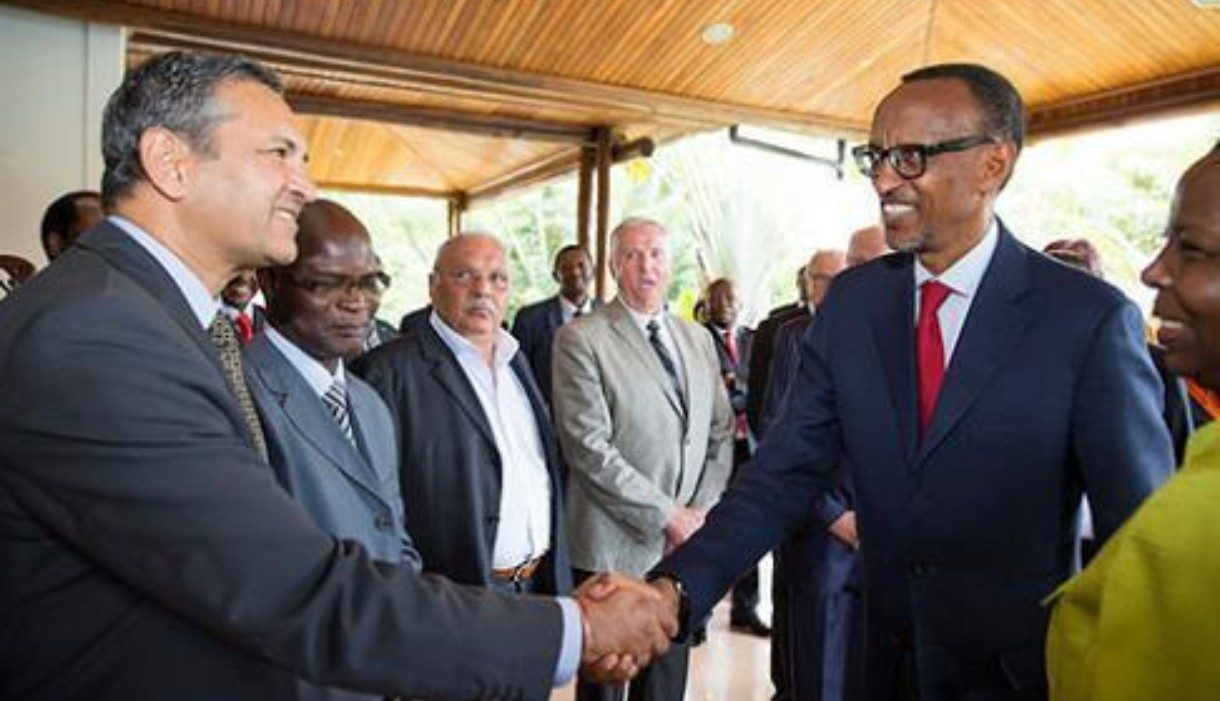
Meeting H.E. President Paul Kagame at a gathering of Rwandan Envoys.
Also pictured: Louise Mushikiwabo, then Foreign Minister of Rwanda,
today Secretary General of the Organisation Internationale de la Francophonie.
That is the credential. Built not in a year but across eighteen years of consistent presence in a country's life at the moments when presence was not convenient or fashionable but simply necessary. The credential is the record of the showing up. The diplomatic appointment is what the showing up eventually produces.
And Mauritius — the island where I now live, where this book was written, where the trade winds come off the Indian Ocean with no memory of anything — I came here for a business meeting. I met Pam. I stayed. A chance meeting in a specific place at a specific moment, and the formation assembled itself around that meeting in ways I could not have planned and would not have changed.
The device rental business, the Motorola distribution, the coffee origin venture, the Honorary Consul credential, the insurance chairmanship — none of these were planned from a strategic overview of the Indian Ocean commercial landscape. They grew from the ground up, in the specific place where I was standing, through the relationships that the standing produced. The leverage was in the terrain I was actually in, not the terrain I had aimed for.
Find the terrain where you have the most leverage. Go there fully. Stay. The world doesn't need you everywhere. It needs you to be extraordinary in the specific place where only you can be extraordinary. That place exists. The reading reveals it. And sometimes — often — the reading happens by accident, through a chance meeting at a business event on a small island in the Indian Ocean, and the whole formation assembles itself around that meeting across the next twenty years.
In 1989, the year the Berlin Wall came down and the world was busy watching history happen in Europe, I went back to Uganda.
Not as a refugee returning. As a businessman arriving. The country that had expelled my family at seven years old, that had separated us from my father for two years, that had put my mother in the position of packing gold jewellery into talcum powder bottles and reading immigration desks on Monday nights — that country was where I chose to build my first business. I didn't think of it as symbolic at the time. It was simply where the geology was.
I had trained as a geochemist. I knew what the ground in this part of central Africa contained. Tin ore. Tungsten ore. Tantalite — columbite-tantalite, a dull black ore that the industry traded quietly, that mineralogists understood and almost nobody else did, that had specific industrial uses and a modest but reliable international market. The artisanal miners in Uganda, Rwanda, and what was then Zaire were digging it out of the earth and had no reliable connection to the buyers who needed it. I was the connection.
The business model was straightforward to the point of elegance. I paid the miners in local currency — Ugandan shillings. My income from international buyers came in dollars. You do the analysis. In a country emerging from the chaos of the Amin and Obote years, with a weak currency and a thin formal economy, every exchange rate movement worked in my favour. More importantly: the miners were getting cash for production that had previously generated almost nothing. I provided rudimentary equipment and tools to some of them. I augmented incomes that had been almost entirely subsistence. This is what early market creation actually looks like — everyone in the chain benefits, and the person who built the chain captures the spread.
Family members funded the start. I built a team for beneficiation — cleaning and processing the ore before export to international buyers. I used agents to reach into Rwanda and across into Zaire. I ran this operation for five years, from 1989 to 1994, out of the country that had once expelled me. I was twenty-something years old, operating across three countries, in local currencies, with artisanal miners who were augmenting subsistence incomes, exporting to buyers who had no idea what the ground these minerals came from looked like.
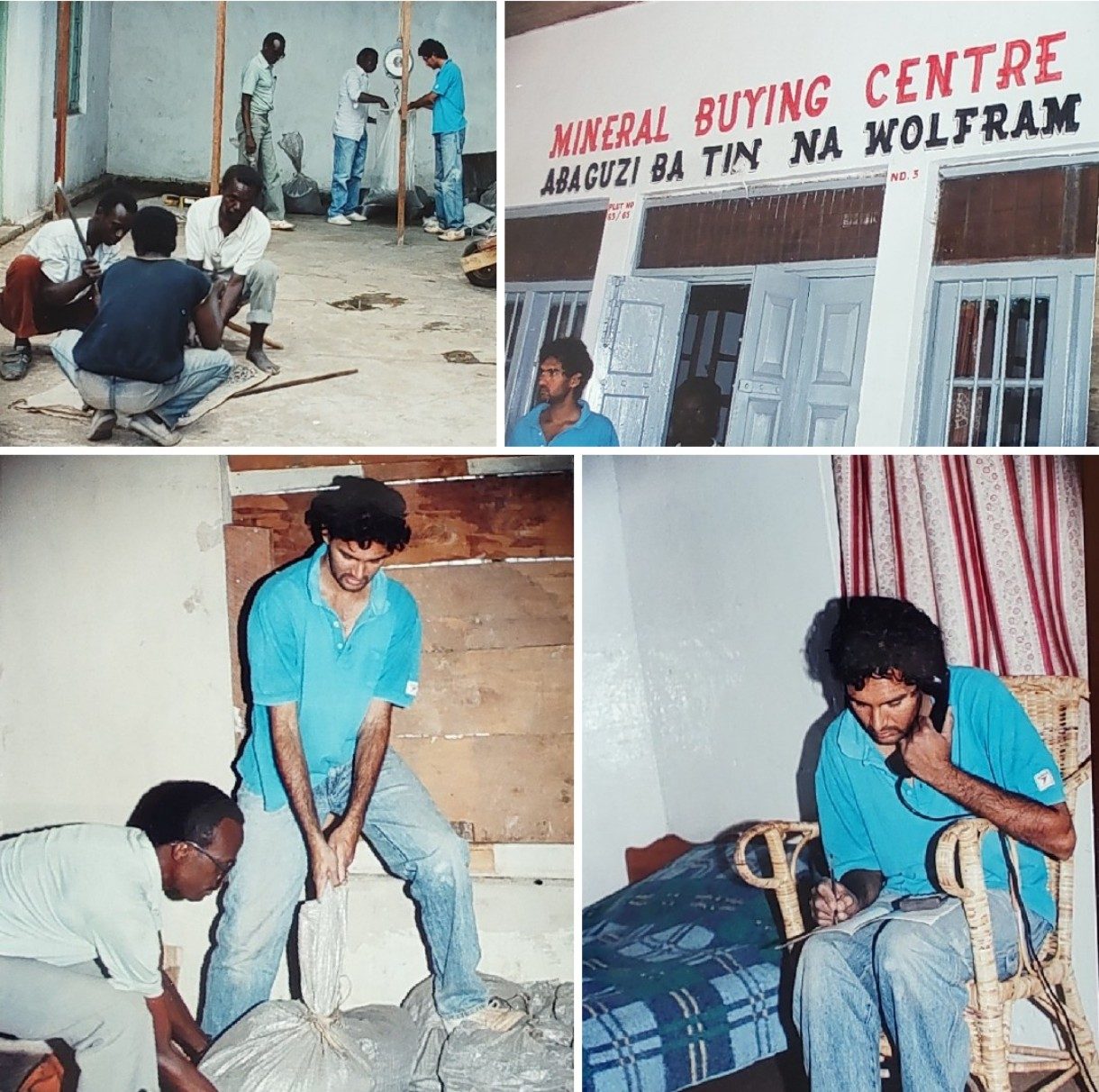
Kabale, Uganda, c.1991. The Mineral Buying Centre — Tin and Tungsten.
The ore in the sacks is the material the technological revolution was built on. Nobody knew that yet.
Nobody used the word coltan yet. That word came later — coined by Congolese miners, entering global usage around 1999 to 2001, when the mobile phone boom sent tantalite prices multiplying by nearly ten. When UN investigations documented the wars being fought over it. When legislation was passed in Washington to regulate its supply chain. When the term "conflict minerals" entered every corporate sustainability report on earth.
I was five years gone by then. Five years out of the trade, watching from a distance as the mineral I had cleaned and exported from Uganda became the material the technological revolution was built on. The smartphones in every pocket on earth contain tantalite capacitors. Every laptop. Every piece of consumer electronics ever made. The ore I paid for in shillings, in cash, in the mining areas of Uganda and across the borders into Rwanda and Zaire — that ore is in the device through which you are reading this book.
I did not understand this in 1989. Nobody did. That is the point. The deep structural force was already in the ground. The artisanal miners were already digging it out. I was already connecting it to international buyers. And none of us — not me, not the miners, not the buyers — understood what we were standing on.
This is the third stratum principle at its most unforgiving: the deep structural force does not announce itself. It sits in the ground, forming slowly, becoming what it will become, indifferent to whether the people standing on it can read it.
There is a morning that proves this better than the ore does. I was driving north on business — my own car, my own driver, the ordinary run up from the mining areas toward the capital. We stopped in Ntungamo for refreshments. Not a planned stop. In the town the talk was all of one thing: a large movement of soldiers had gone through earlier that morning, heading for the border. Nobody knew whose, or why. The men telling me did not know. I did not know. We turned it over the way you turn over any small strangeness on a long drive, and I got back in the car and went on to Kampala.
It was in Kampala, and then on CNN, that I learned what had moved down that road ahead of me. The RPA had crossed into Rwanda. The war had begun — the four-year war that would end in 1994, in the country I would walk into three months after its worst hour and never really leave. I will not call it an invasion. They were going home. But that is a reading I could only make later. That morning, on the same road, I had no frame for any of it. The deep structural force of the region's entire next decade went past me disguised as traffic, and I read it as men telling stories over a cold drink.
And I was the trained reader of that ground. A geochemist. A man who knew what the earth there held better than the people digging it out. I could read the army on the road no better than I could read the tantalite in the sacks. Both were deep structure. Both were already moving. Neither announced itself to the man standing on top of it.
Although — and I want to be honest about this — sometimes walking away is the right answer.
In western Uganda, in the Buhweju area, I went prospecting for gold with some local people. Into real jungle — the kind where you lose the sky and the hours and your sense of direction simultaneously. We spent endless time in there, hearing elephant herds trumpeting somewhere deep in the forest, the sound moving through the trees in a way that makes the air feel different, that makes you understand very quickly how small you are relative to the terrain you're in. We came out dehydrated and exhausted.
We had found gold. In the streams, in the sediment, in the places a trained geologist knows to look — it was there.
I didn't pursue it. The place was too beautiful for mining.
A geologist. A mineral trader. A man who had built a business on extracting value from the earth — went into the jungle, found the gold, and walked away from it. Because the place was too beautiful for mining. I have thought about that decision many times since. Not with regret and not with pride. With recognition. Because that decision contains something that none of the five scrolls can fully teach, something that sits beneath all the doctrine and all the method.
The highest form of reading the formation is knowing when not to cut.
Some ground is worth more left intact than extracted. The elephants in Buhweju were in a forest that nobody had mined. That forest existed because somebody, at some point, had found what they were looking for and chosen to leave it. I found what I was looking for. I chose to leave it. Three layers. One cut. Except when the most honest reading of the formation is: leave this one alone.
Around 1998 or 1999, I understood what tantalite had become. The world was calling it coltan. UN investigations were underway. Wars were being fought over it in eastern Congo. The price had multiplied nearly tenfold. Every news outlet that had never heard of columbite-tantalite eighteen months earlier was now publishing investigations into the conflict mineral supply chain.
I didn't feel anything.
I had already moved up the value chain to the devices that would use the minerals. By the time the world caught up to what I had been standing on in 1989, I was selling Motorola radios across Africa. The formation had been read. The value had been extracted — not just financially, but intellectually. The next formation was already underfoot.
I don't do emotion. I do the next thing.
That, more than anything else in this scroll, is what the geological temperament looks like in practice.
In 2003, Motorola was supporting a wildlife conservation initiative in Kenya. Through the Global Environment Facility — GEF, the World Bank-implemented conservation funding body — we supplied two-way radios to Lewa Wildlife Conservancy in Laikipia. The project had been approved in 1999 and focused on protecting endangered species across a 65,000-acre landscape: rhinos, Grevy's zebra, the specific biodiversity that Lewa had become one of the most serious operations on the continent for defending. The same radios I had been carrying across Africa for seven years, now being used to track and protect what the formation contained. As part of that initiative, I had lunch in Nairobi with Richard Leakey.
If you know the name, you know why I am placing this here, in the Ground scroll, immediately after the passage about geological reading. Richard Leakey spent his life doing what this scroll describes — reading formations, reconstructing invisible histories from visible evidence, understanding what forces were acting when all you have is what they left behind. His father, Louis Leakey, had excavated the fossil record at Olduvai Gorge in Tanzania and pushed back the known timeline of human existence by millions of years. Richard had continued that work, added to it substantially, and then pivoted — to the Kenya Wildlife Service, to conservation, to politics, to the long fight to protect the formations that made that evidence possible.
It was a small group. Four hours. He talked about human evolution with the specific authority of a man who has held the evidence in his hands — not as theory, not as academic framework, but as physical, datable, locatable fact extracted from layered earth.
The argument that has stayed with me longest was this. Our earliest ancestors were hunter-gatherers. They did not choose their migrations. They followed the animals — because the animals were the food, and the food was everything. When the climate shifted, the animals moved. And when the animals moved, the humans followed. The great dispersal of humanity out of Africa was not, at its deepest layer, a human decision at all. It was a consequence of the herds moving.
At a specific moment in deep history, when the climate cooled and sea levels dropped, a land bridge opened between Africa and the Middle East — a corridor of passable terrain across what is now the Sinai, through the Levant, into the wider world. The animals found it. The humans, following the animals, crossed it. And everything that followed — every civilisation, every language, every empire, every room I have ever sat in — traces back to that crossing. A bridge that existed because the climate changed. A migration that happened because the food moved.
Surface layer: people moved. Stratum: they were following resources. Deep structure: the climate of an entire continent had shifted, making the familiar terrain uninhabitable and opening a corridor that had not previously existed. The formation determined everything. The people on the ground thought they were making decisions. They were responding to forces they could not see and could not name.
I did not say any of this to him at lunch. The language for it had not yet fully formed. But I recognised something in the way he described it — the same instinct I had been developing commercially, applied to a timescale of hundreds of thousands of years. He was reading the deep structure of human history. I was trying to read the deep structure of commercial rooms. The data was different. The discipline was the same.
He mentioned, in passing, that a well-known billionaire — someone whose name is recognised in every boardroom on earth — would sometimes fly in to join the anthropological digs he was involved in. Not as a sponsor from a distance. Physically present, at the site, in the heat, with the tools. Drawn by the same thing that draws anyone who has genuinely understood what the formation contains: the knowledge that the most important questions about where we come from and where we are going are answered not in conference rooms but in the ground itself.
I am not naming him. Some things are more interesting unnamed. What matters is the image: one of the world's most powerful commercial operators, voluntarily spending time in the dirt, reading the same formation that Leakey had spent his life reading. Because once you understand what the layers contain, you cannot stop looking.
I have thought about that lunch many times since. Because what Leakey demonstrated, across four hours in Nairobi, is the thing this scroll is most trying to say. The formation is always readable. The question is only whether you have trained yourself to look at it as evidence rather than as background. He read the bones of our ancestors and understood where we came from and what drove us forward. Every room I walk into, I am trying to do a version of the same thing. The bones are different. The method is identical.
In 2006 I moved from Motorola's radio division to its cellular division across Africa. The brief was clear: take the brand to number one market share across several African markets in months. Build remote teams. Build relationships. Close at scale.
We did it. As a team across Africa we did $750 million in sales that year. My team's contribution was $100 million. I was doing deals of 100,000 phones at a time — including with Safaricom in Kenya, which was at that point one of the most dynamic operators on the continent. The scale of what was happening across Africa in 2006 was genuinely extraordinary — a continent going mobile at a speed and depth that nobody in the West had fully registered, a formation shifting at every layer simultaneously.
It was in that context — embedded in Safaricom at that level, in that year — that Michael Joseph, then CEO of Safaricom, showed me something in his office in Nairobi.
He showed me the beta version of what became mPesa.
I didn't understand a word. Not one. I sat in Michael Joseph's office in Nairobi in 2006 and I thought: what is this shit? I genuinely had no idea what I was looking at.
I want to be completely honest about that, because the honesty is the point. I was not a naive visitor to that market. I had earned my place in that office through $100 million of sales and 100,000-phone deals and teams built across several countries in a matter of months. I was as embedded in the formation of the Kenyan telecommunications market as any external operator could be at that time. And I sat in Michael Joseph's office in Nairobi in 2006 and watched him show me the thing that would become the financial infrastructure for hundreds of millions of people — the thing that would be studied in every fintech founder's curriculum for the next twenty years — and I didn't understand a word.
Michael Joseph was a true pioneer. Way ahead of the curve — ahead of mine, certainly, and ahead of almost everyone else's. What he was showing me was the deep structural shift in its earliest visible form: the recognition that the continent's hundreds of millions of unbanked people were not a problem to be solved by conventional banking, but a formation to be read differently — by someone willing to look at mobile phones not as communication devices but as financial infrastructure.
He saw it. I was in the room. I didn't see it.
I have thought about that office many times since. Not with regret — regret is not the useful response to having been present at something historic and not fully recognised it. With instruction. Because the lesson of that room is the lesson of this entire book: being in the terrain is not sufficient. Being close to the formation is not sufficient. Being shown the deep structural shift by the person who understands it is not sufficient. The reading requires deliberate, trained attention to what is actually there rather than to what you expect to find.
The three-stratum method exists precisely for that moment — the moment when a pioneer is showing you something in an office and you are at risk of missing it because the surface layer of what you're seeing doesn't yet reveal the depth beneath it. Walk into every room asking: what is the deep structural force this person is trying to show me? What does the formation beneath the surface of this contain? What am I at risk of walking over?
The next person shown something like what Michael Joseph showed me — in an office in Nairobi, or Lagos, or Kigali, or Johannesburg — that person now has a method for reading what they're being shown. That is what this book is for. That is why this chapter exists.
Before entering any new market, relationship, or category, I run what I call the pre-entry reconnaissance — a systematic reading of every layer of the formation before I commit any visible resource to the engagement. Think of it as the geologist's work before the drilling begins: understanding the formation so completely that when you finally move, you move with precision rather than hope.
Three stages. First: find the formation witnesses. People who know the terrain and have no competitive interest in misleading you about it. Typically operators in adjacent categories, informed observers with their own relationships inside the space. Buy them a meal. Listen twice as long as you speak. Their honest testimony, combined with what you can directly verify, gives you the first accurate read of the surface layer — not the published version of the surface, the real one.
Second: map the established interests. Who benefits from the current configuration? Who would be affected by what you're proposing? These people won't oppose you overtly — they'll express their interests through the softer mechanisms of the second stratum: delayed meetings, mild scepticism from unexpected quarters, the quiet word that creates friction you can't locate. Map them early, approach them honestly, and what might have become opposition can often become alignment. The person you feared was your biggest obstacle is sometimes, with the right conversation at the right moment, your most important champion.
Third: test the deep structural force. Is it genuinely structural or a passing trend? The test: is it creating irreversible dependencies? Is it being adopted by people with nothing to gain from adopting it optically? Does it persist even in adverse conditions? When you find a genuine structural shift in its early stages, move with everything you have. The window is narrow. The advantage compounds for decades.
Let me show you the three-stratum method applied to something I am currently exploring — not executing, exploring. That distinction is important and it is the honest one. I am at the stage of reading the formation, not yet at the stage of cutting. I'm using this example precisely because it is unresolved — a completed transaction is too easy to reverse-engineer, and an idea still forming shows the method in its most raw and useful state.
Surface layer: Rwanda is building toward becoming East Africa's digital hub. Data centres are a stated government priority. Power is the primary constraint. Lake Kivu contains dissolved methane sufficient to power industrial-scale facilities for decades. Shema Power Lake Kivu Limited extracts and generates from that methane. The surface opportunity: connect a data centre developer to this power source. Several operators can see this much. Several are circling.
Second stratum: any government will have concerns about how foreign capital participates in its critical infrastructure, and on what terms — and I read those from the outside, as an analyst of the formation, not as anyone's spokesman. The existing power plant shareholders have their own interests in how the asset develops. The development finance institutions — BII and others — carry mandates and governance requirements that will shape any structure before a word of a contract is drafted. The data centre developers each bring their own internal politics to a market this specific. None of this appears in any briefing note. All of it determines everything.
Third stratum: AI-driven demand for processing capacity is beginning to exceed what existing data centre geography can absorb. That demand is moving toward markets previously invisible as hosts — driven by available land, reliable power at competitive cost, and the strategic imperative to diversify infrastructure away from geopolitical concentration. Africa is newly visible on all three dimensions simultaneously. Rwanda leads the group of ready African markets — by a margin that most operators haven't registered yet.
The reading tells me the angle exists — if the formation is what it appears to be. What I don't yet know is whether the power is genuinely available for a private offtaker, whether the government's strategic objectives align with the structure I am imagining, and whether any developer has the mandate and the appetite for a market this specific. I am in the process of answering these questions before committing any visible resource. That is what the reconnaissance looks like on a live idea.
I include this not to impress with the scale of what I'm building — I am not building it yet — but because the method is most visible when applied to something uncertain. The reading is the work. The building, if the reading confirms the angle, comes later.
The same three-stratum method applies to any situation anywhere. A tech founder in Berlin: surface is the competitive landscape and press coverage. Second stratum: the investor relationships, regulatory sensitivities, the informal networks that determine who gets access to what. Third stratum: the structural shift in how software is being bought — from licences to subscriptions to embedded intelligence — and where that shift is creating permanent new positions. The method is identical. Only the specific contents of each layer differ. Read all three. Act from all three.
Four questions. Write the answers — by hand if you can. Something about committing words to paper reaches a quality of honesty that thinking alone doesn't always access. There are no wrong answers here. Only honest ones and incomplete ones — and both of those are useful.
Not the ground you're building toward. The ground today: your real resources, your real relationship depth, your real operational capacity without the optimistic assumptions. Write the honest picture. The honest picture is always the most useful starting point — because strategies built on the honest picture actually work.
Name it in one word — with kindness, not judgment. Then write one time it served you well and one time it cost you something. Both are true of every pattern. The full picture is the useful one.
Three genuine capabilities your history demonstrates — not aspirational ones, demonstrated ones. Then one area where you consistently need support. That combination is your team brief and your strategy simultaneously.
Name it. Name what's been in the way. Very often, naming both clearly is the first and most important step toward removing the barrier between them.
Water
The meeting had been going nowhere for forty minutes. West Africa. Four people across the table. Presentation good. Product right. Pricing fair. Nothing moving. Four people across the table. Presentation good. Product right. Pricing fair. Nothing moving. The particular quality of polite impasse that commercial meetings produce when nobody's willing to say the actual thing.
I stopped. Set down the page I was holding. Looked directly at the person across from me — not the group, him — and said something true. Not a presentation sentence. A real sentence, in the register the room was actually operating in, about what was actually happening between us: that we'd been speaking past each other for forty minutes, and I'd like, with his permission, to start from something more honest.
The room changed. Not dramatically — you wouldn't catch it on film. But anyone who has spent time in rooms where real things are decided would have felt it. The quality of attention shifted. The bodies relaxed fractionally. He smiled in the way people smile when they've been seen accurately and are relieved by the accuracy.
We closed two months later. Not because of the product. Because of that sentence — the one that stopped performing and started being present.
This scroll is about the discipline that makes that sentence possible, in any room, in any language, anywhere on earth.
Water has no fixed form. It takes the shape of its container without becoming the container. That distinction — between taking the shape and becoming the thing — is the whole of this scroll in one sentence.
Water finds the path of least resistance not from weakness but from a form of intelligence that recognises the shortest distance between two points is not always a straight line. It wears down the hardest rock not with force but with patience and the relentless application of its own nature. It can sit in a pool for ten thousand years, perfectly still, and move with extraordinary speed the moment the dam breaks.
This is the second principle of strategy, and it may be the most beautiful: you can be fully present to every world you enter, fully adapted to its needs and its language and its way of understanding things, without losing a single essential quality of who you are. This is not compromise. It is the highest form of intelligent engagement — and it is available to anyone.
I speak four languages. This is not a credential. It is a strategic asset — and not primarily because it allows communication without an interpreter. Language is not a communication tool. Language is a world-building tool. When you speak Swahili with someone in Nairobi, you're not exchanging information more efficiently. You're signalling that you've entered their world — that you don't require them to come to yours. That shift in relational dynamic is worth ten times any advantage in product, price, or feature.
The strategist who insists on a single operating style is like a river that refuses to go around a mountain. Eventually it stops. Water does not stop. Water has never met a mountain it ultimately failed to reshape — and it does so not through force, but through the patient, relentless application of its own nature.
Here is the thing nobody tells you about cultural adaptation, and it's the reason most intelligent operators who try to do it properly still fall short.
The false form of adaptation — let's name it clearly — is the adaptation of manners without the adaptation of mental model. You learn to greet people properly, to be patient with different timelines, to ask about the family before asking about the deal. You call this cultural adaptation. And it is — at the surface layer only. Underneath, you're still operating with your original assumptions about what a meeting is for, what trust means, how quickly decisions should be made, and what the relationship between stated position and actual position is in a negotiation. You've adapted the surface without touching the formation beneath it.
The people across the table feel this. Not always consciously — but with the full accuracy of humans reading other humans at the level they've been doing it for fifty thousand years. They feel the gap between the surface being presented and the formation underneath it. That gap is what doesn't close the deal.
True adaptation is not performance. It is genuine enquiry. The willingness to step outside your own framework and ask — from real curiosity, not strategic calculation — how does this person understand the world? What does a good outcome look like from inside their situation? What are they actually protecting here? What do they need that nobody is currently giving them?
You take the form of the world you're in without losing the nature of what you are. You don't become the other person. You become capable of accurately perceiving them. This is the third principle: water takes the shape of the container without becoming the container. Mastery, not compromise.
Every market — every room — has an official language and several unofficial ones. The official language is recorded in minutes and published in press releases. The unofficial languages are where everything actually happens. After forty years across forty African nations, I've identified five that govern the majority of significant commercial outcomes. They operate in every market on earth. Africa just makes them visible, because where institutional infrastructure is thinner, more of the real conversation has to happen in the unofficial channels.
Who can call whom, and what the call means when it's made. Not the formal org chart — the relational hierarchy, which is usually different and always more powerful. A call from the right person can move something that six months of formal process cannot. Knowing who holds this power, and earning the right to ask for it, takes years of consistent, generous investment. It is the best investment available to any operator who intends to be in their industry for more than five years.
What each party is actually afraid of, as distinct from what they say they're afraid of. The stated concern and the real concern are almost always different. Reading the real risk — the one that's driving the resistance but hasn't been named — is one of the most commercially empowering skills available. Because once you can see what someone is genuinely afraid of, you can address it directly. And resistance that seemed immovable simply dissolves.
What each party needs to be able to tell their own stakeholders about what happened here. Your job is to make the deal narrative-safe for the person signing it — to structure the offer and the process so they have the story they need to tell internally. This is not manipulation. It is genuine care for the reality of their situation. And care, expressed clearly, builds the kind of trust that sustains commercial relationships across decades.
The unspoken communication about when something can happen. Every institution has a rhythm of decision-making invisible in the org chart: budget cycles, leadership transitions, regulatory reviews, political sensitivities. The operator who reads this rhythm — who arrives at the moment of openness rather than pushing against the moment of resistance — accomplishes in one conversation what others cannot accomplish in six months.
The long-horizon ledger where acts of genuine generosity accumulate into a reserve of goodwill available when it's needed. Not quid pro quo — a long-horizon accounting that rewards consistent, generous, uncalculated giving. I've been the beneficiary of this principle more times than I can count, in situations where the formal logic of the market would have produced nothing at all. The returns from genuine generosity, given in the right relationships over sufficient time, are so disproportionate that calculation diminishes them. Give without calculating. The ledger keeps itself.
We landed at Ndjili Airport in Kinshasa in the early morning. A group of us — me and a team of Kenyan customers I was bringing into the DRC to explore the Motorola smartphone market. The first thing that happened, before we had even reached the terminal building, was instruction: walk in single file along the white line painted on the apron surface from the aircraft to the terminal. No deviations. The white line was the only permitted path between the plane and the building. We walked it.
At the immigration counter my customer was ahead of me in the queue. He stepped up to the desk, looked at the officer, and said, with complete and genuine cheerfulness: "Good morning."
The officer looked at him and said: "Morny."
My customer blinked. Said good morning again.
"Morny," said the officer. And then nothing. He held the passport. He looked at my customer. He said nothing further.
My customer said good morning a third time. Same reply. Same silence. Same held passport. The queue behind us was not moving. The officer was not moving. The passport was not being stamped.
On the third round I understood what was happening. The officer did not mean morny. He meant money. Twenty dollars, to be specific, which is the specific amount that makes a passport get stamped at Ndjili Airport in 2007 when you have not pre-arranged your entry and the officer has decided that the official process requires a supplement.
I leaned forward and explained this to my customer, quietly. Twenty dollars changed hands. The passport was stamped. We moved through.
I include this story immediately after the chapter on unofficial languages because it is the most compressed demonstration of those languages I have ever witnessed. My customer was speaking the official language of that immigration counter — English, cheerful, correct, the language of a legitimate business traveller presenting himself for entry. The officer was speaking the Language of Risk — not the risk of being denied entry, but the risk of the officer's own position: he needed the supplement, he couldn't say so directly, and he had developed a specific phonetic mechanism for communicating the requirement without stating it explicitly.
"Morny" is not a mispronunciation of "morning." It is the Language of Risk, spoken at the surface level of the Language of Relationships, communicated in the register of the Language of Reciprocity, timed according to the Language of Timing. It is all five unofficial languages operating simultaneously in one four-letter word.
My customer — a sophisticated Kenyan businessman, experienced in African markets — could not hear it. Because he was listening to what was being said rather than reading the formation of why it was being said, what it actually meant, and what the correct response was.
Twenty dollars. Passport stamped. Formation read.
That is the whole of the Water scroll in one scene at an immigration counter in Kinshasa at six in the morning.
Water can be still for ten thousand years and move with extraordinary speed in an instant. Most people are either too fast or too slow. The wisdom of the water principle is that neither speed nor stillness is inherently superior. What matters — what takes years of practice to develop — is knowing which the terrain requires at this specific moment.
I've launched products too early. Before the relationships that would carry them were warm enough, before the trust that makes a cautious buyer take the first step had been established. My speed created the specific damage of a first impression that had to be corrected — always more expensive than making the right impression to begin with. I've also waited too long: held back from a move that was ready because I wanted more certainty than the terrain was going to provide. Both errors are instructive. The water principle is not a prescription for patience or for urgency. It's a prescription for reading what this specific moment requires.
There is a moment in every significant conversation when the correct move is complete stillness. You have said what needed to be said. The other person is deciding. The silence that follows is not empty — it is where the decision forms. It is the most important part of the conversation. Trust it. It is working on your behalf.
In markets where institutional infrastructure is strong — predictable legal systems, enforceable contracts, transparent regulation — personal trust supplements the formal systems. The institution provides the floor. In markets where institutional infrastructure is thinner, personal trust is the infrastructure. Everything runs on it. Without it, nothing moves. With it, almost anything is possible.
This is not a weakness of those markets. It is a feature that rewards a specific quality of operator: the person who shows up consistently, delivers what they commit to, acknowledges quickly when they've fallen short, and treats every relationship as an end in itself rather than a means to a commercial objective. I've maintained relationships across this continent for decades — commercially quiet for years, then suddenly the hinge of a major transaction, because the trust built during the quiet years was exactly the trust required when the business arrived.
You cannot accelerate this. You can only do it. The doing is the investment. The return is geometric. And it compounds in directions you cannot always predict — but will always, eventually, be grateful for.
During the mineral trading years I went to Bunagana, the border post between Uganda and Zaire in the far southwest. I did not have my passport with me. I did not have any identification. I walked across the border into Zaire anyway.
Not by stealth. Not through a gap in a fence. I walked across the border post itself and got talking to the soldiers and officials on the Zairois side.
They hosted me to a beer party.
Primus beer. The great Congolese lager, brewed since the colonial era, drunk in quantities across central Africa that would surprise anyone who has not spent time there. We drank plenty of it. The Zairois soldiers were friendly — genuinely, warmly, without agenda. They asked for nothing. No money, no document, no fee for the informal border crossing that had just occurred. They were simply people who had encountered another person and chosen, in the way that people in that part of the world sometimes choose with a completeness that has no equivalent in more transactional cultures, to be perfect hosts.
I staggered back across the border into Uganda, then drove eight hours straight to Kampala. Alone. Along murram roads — unpaved laterite tracks through the Ugandan interior, red dust and ruts and the specific surface that becomes deeply corrugated from the passage of vehicles and requires a specific speed to navigate without shaking the car apart. At times very windy. With steep drops of hundreds of metres on one side.
I arrived in Kampala. I include this story in the chapter on trust as commercial infrastructure because it contains the purest demonstration I have ever encountered of the Language of Reciprocity operating without any commercial context whatsoever. I arrived at that border with nothing — no document, no money offered, no transaction proposed. I approached the soldiers as a human being approaching other human beings in a place where that approach was unusual enough to be interesting. And they responded in kind, completely, with Primus beer and several hours of genuine hospitality that asked for nothing in return.
The received narrative about soldiers in unstable Central African states in the early 1990s does not predict this outcome. The received narrative is wrong, or rather, it is a surface-layer reading of a formation that is more complex and more human than the surface suggests. The Zairois soldiers at Bunagana were not the received narrative. They were people doing a job at a remote border post who had been approached without fear or transactional intent, and they responded to that approach with the specific generosity that humans extend to other humans who treat them as exactly that.
Give without calculating. The ledger keeps itself. Sometimes the return is Primus beer and perfect hospitality at a border post in Zaire with no passport. Sometimes it is something more commercially significant. The principle is identical in both cases. The quality of your approach determines the quality of what comes back.
And sometimes the return is an invitation to a party hosted by one of the wealthiest men in Africa, given to two strangers who wandered over because they heard music.
The Sheraton Addis had just opened. 28 February 1998. Ethiopia's first privately owned international-standard hotel, built at a cost of over $200 million by Sheikh Mohammed Hussein Al-Amoudi through his MIDROC group — a man who said he was investing in Ethiopia by following his heart, not his head. I was there with a Motorola partner. We had just checked in. We were among the first guests the hotel had received.
That evening we heard music coming from the hotel grounds. We followed it.
We came upon a villa. At the door stood an elegantly dressed gentleman. We got into conversation — two guests who had just checked in, following the sound of music, curious about what was happening. He listened. He smiled. He said: this is my hotel. I am having a celebratory party. You should join us.
It was Sheikh Mohammed Hussein Al-Amoudi.
We joined the party. The hospitality was complete and genuine, offered without calculation, without any assessment of who we were or what we represented commercially. Small talk. Good company. The specific warmth of a host who is genuinely glad you are there.
I include this scene directly after the Bunagana border story because together they demonstrate something about the Language of Reciprocity that no single story can demonstrate alone. At Bunagana: Zairois soldiers at a remote border post, no wealth, no status, perfect hosts to a stranger with no passport and nothing to offer. At the Sheraton Addis: one of the wealthiest men on the African continent, standing at the door of his own villa at the opening of his own hotel, inviting two strangers in because they were curious and he was generous.
The quality of the giving was identical. The circumstances were as different as circumstances can be. The principle was the same in both cases: give without calculating. Be genuinely glad the other person is there. Let the ledger keep itself.
Sheikh Al-Amoudi said he built the hotel by following his heart, not his head. That sentence has stayed with me. Not because it is romantic — though it is — but because it describes something precise about how the most durable things get built. The head calculates return. The heart reads the formation of what is actually needed and responds to it. The Sheraton Addis became arguably the finest hotel on the African continent not because the numbers justified it but because someone read what Ethiopia needed and gave it, fully, without hedging.
Follow your heart, not your head. Let the ledger keep itself. The returns, when they come, are always disproportionate to the calculation that would have preceded them.
I want to add a note here — not a principle, just an honest acknowledgment of what forty years of commerce across Africa actually produces in terms of the people and places and situations it takes you into. It is not always elegant. It is frequently surprising. And the honest reading of a person in front of you is sometimes more complicated than their public reputation suggests.
In 1998 in Abuja, through a mutual friend, I used to encounter John Fashanu — the former Wimbledon and Aston Villa striker, Gladiators presenter, a man deeply embedded in Nigerian football and Nigerian life. On one occasion he invited me to a football match where Major Hamza Al-Mustapha was playing. Al-Mustapha was, during the Abacha years, one of the most feared men in Nigeria — the head of the late General Abacha's personal security apparatus, a man whose reputation was, to put it plainly, terrible.
After the match, the Major invited us to his villa within the grounds of Aso Rock — the presidential complex in Abuja.
He and John spoke privately. I was entertained in the lounge. Food, drinks, the specific warmth of a host who wants his guests to be comfortable. He was, on that specific day, a gracious host.
I am not saying more than that. Commerce takes you into rooms you did not anticipate, with people whose public reputations do not always match the specific person you encounter in the specific moment. The reading is always of the person in front of you, in the room you are actually in. Everything else is someone else's formation to read.
The eight-hour drive was fine. The roads were as described. I arrived.
The clearest test of the water principle in my own life was the decade I spent carrying the Motorola brand across Africa. I want to describe this not as a trophy — it was also a furnace — but as an illustration of what water doctrine looks like when applied to demanding terrain over time.
When I began, the revenue line was close to zero in most of the markets I covered. No established distribution. No brand recognition. No relationships with the governments and institutions that controlled the contracts. No playbook. I had a product, a mandate, and four languages. What I had to build was presence — and presence in Africa is built in the field, in the specific geography of each market, with the specific people who have the credibility and connections to carry your brand into spaces that external operators cannot reach on their own.
In practice: I took the form of each market I entered rather than requiring it to conform to my operating model. In East Africa, where Swahili is the language of commercial trust, I operated in Swahili. In West Africa, where the commercial culture is more direct and the speed of relationship development is faster than anywhere else I've operated, I matched that speed. In Southern Africa, where the post-apartheid institutional landscape shapes every commercial interaction, I brought the historical knowledge and sensitivity that the terrain required. I didn't have a single operating style. I had a single operating principle — read the terrain, take the form of the container, deliver the substance — applied differently in every market.
Across that decade in radio: from zero to approximately fifty million dollars as a small team — not me individually, the team. Then in 2006 I moved from radio to cellular, with a different brief: take the Motorola cellular brand to number one market share across several African markets in months. By the end of that year, my cellular team had contributed a hundred million dollars in annual sales to an Africa-wide number of seven hundred and fifty million. These numbers are the specific, measurable return on the water discipline applied consistently over time in conditions that would have broken an operator working from a fixed style.
The joy of the work — the genuine, daily joy of it — came precisely from the adaptability. Every market was a new world to enter. Every relationship was a new universe to understand. The water principle doesn't make commerce efficient. It makes it alive.
I am involved in coffee from Africa — from the volcanic highlands where altitude and soil produce something the world wants badly but has historically paid almost nothing for. I want to talk about this business because it is the most complete expression of a commercial philosophy that took decades to fully articulate — and because the model we are building challenges, at its foundation, one of the most persistent injustices in the global economy.
One of the things that appals me about Africa's relationship with international markets is this: everyone wants its raw materials. Nobody wants its finished products. The continent grows some of the world's finest coffee, cocoa, minerals, and agricultural produce — and then ships it out unprocessed, unroasted, unrefined, at the bottom rung of the value chain, for someone else to transform, brand, and sell at multiples of what Africa received. The transformation margin — the largest margin in every supply chain — leaves the continent before Africa ever sees it.
The conventional specialty coffee model is a chain of independent actors, each extracting a margin from the link they control. Farmer grows. Cooperative aggregates. Wet mill processes. Exporter moves the green bean. Importer receives it. Roaster transforms it. Brand sells it. Retailer delivers to the consumer. At each link, a margin is taken. At each link, information is lost. By the time the consumer receives the cup, the story has been diluted by every hand that touched the bean since it left the farm — and the farmer has received a fraction of a fraction of what the consumer paid.
The model we are building is turning tables on this. The principle is non-negotiable: nothing should leave the continent without value added. Coffee grown in Africa must be processed and roasted in Africa before it is shipped to international markets. The transformation happens at origin. The value accrues at origin. That is the starting condition.
What makes this possible now, in ways it was not a generation ago, is electronic commerce. Through direct-to-consumer digital channels, the African producer can bypass every link in the traditional chain — the importer, the distributor, the brand, the retailer — and sell directly to the person drinking the cup. The producer wins by receiving the best return their product has ever generated. The consumer wins by receiving coffee direct from the hands that grew it, at a price that reflects that directness. Africa does not need to sell raw green coffee to a chain of intermediaries who each take a margin for doing nothing to the product that the producer could not do themselves.
And the true vertical integration — the complete version of this model — is when the producer opens their own cafés in consuming countries. Not a licensee. Not a franchise arrangement with a foreign operator taking the margin. The producer's own physical presence in London, Paris, Dubai, Singapore — serving their own product, employing their own people, telling their own story, capturing the retail margin that has always been the furthest point from them in the chain. That is the full circle. That is what turning the tables actually looks like.
The coffee model is not unique to coffee. The same architecture applies to cocoa, to minerals, to every agricultural commodity the continent currently exports at the bottom of the value chain. Nothing should leave Africa unfinished. That is not a slogan. It is a commercial strategy — and it is executable today in ways it has never been before.
Own the chain. Tell the whole story. Sell the finished product. Open the café.
There is also an opportunity here for consuming countries. Instead of importing raw materials from African producers at minimal cost and capturing the transformation margin themselves, consuming-country investors can invest in the producer countries — in the processing infrastructure, the roasting capacity, the logistics — and serve their own markets from a position of genuine partnership with origin. That is a model where both sides win more than they do today. The current model is not inevitable. It is a habit. Habits can be broken.
I want to say something about corruption that most people who write about Africa won't say, because saying it requires a quality of honesty that is more comfortable to perform than to actually practice.
Between 1989 and 1994, I was stopped by a traffic cop in Uganda almost every Friday. The same cop, more or less. He would see me and pull me over and I would pay his weekend. That was the transaction. It was not a fine. It was not a bribe in the dramatic sense that the word implies. It was a weekly contribution to the survival of a public servant whose official salary was insufficient for the life he was trying to maintain. He knew where to find me. I knew what he needed. The relationship was stable, predictable, and mutually understood.
There were Fridays when I genuinely had no spare cash. On those Fridays, I negotiated credit terms. I would explain the situation — briefly, without drama — and he would extend the credit, because he knew he could always find me and he knew I was good for it. We had built, across months of consistent weekly interaction, exactly the kind of trust that the Language of Reciprocity describes. He could always find me. I always eventually paid. The relationship held.
Always cash in hand. Directly. No intermediaries, no envelopes, no theatre. I never did see the inside of any cell. Not once across five years of Friday afternoons in Uganda. The formation was always read in time.
I do not romanticise this. Petty corruption is a tax on commerce, a drag on development, and a daily frustration for everyone who operates in environments where it is prevalent. I understand all of that. I also understand something that the policy discussions about corruption rarely acknowledge: public servants on the breadline survive how they can. That is not a moral endorsement. It is a factual observation about the conditions that produce the behaviour. The line I draw — and it is a clear line — is between the person on the breadline extracting what he needs to survive and the public servant with a fat salary and full perks who crosses into corruption out of greed rather than necessity. Those are different formations. They require different readings and different responses.
In Uganda in 1989, I was operating in the first formation. So I paid the weekend when I had it and negotiated credit when I didn't, and the work got done.
Then there were the strangers. The ubiquitous checkpoints staffed by cops I had never met and would never see again. No relationship, no credit terms, no established understanding. Just a uniformed person with authority and a requirement that I demonstrate I was not a threat.
At those checkpoints, when asked to describe the contents of the rear of my vehicle, I would sometimes tell them I had a thermonuclear warhead.
They would nod and wave me through.
I want to explain why this worked, because it is not funny in the way it first appears — or rather, it is funny in exactly the way it appears, and the explanation of why it worked is the most compressed demonstration of formation reading in this book.
The checkpoint cop was not actually checking for anything specific. He was performing authority. The performance required a response that acknowledged the performance. A nervous response — fumbling for papers, over-explaining the contents, displaying the specific anxiety of someone with something to hide — would have extended the performance and possibly escalated it. A confident, absurd, completely unanswerable response — thermonuclear warhead — acknowledged the performance so completely, so far beyond anything he had the apparatus to process, that the performance concluded. There was nothing left to do except wave the vehicle through. The formation had been read in approximately one and a half seconds. The angle had been found. The cut had been made. They would nod and let me pass.
I include this story not as a guide to checkpoint navigation in post-independence Uganda — the specific terrain has changed — but because it contains the water principle at its most essential: you take the form of the world you're in without losing the nature of what you are. The world of that checkpoint required a specific kind of response. I gave it. I drove through. The mineral trading continued. The formation read itself correctly.
Commerce in the real world looks like this more often than any business book acknowledges. Not always with thermonuclear warheads. But always with the same fundamental requirement: read the room you're actually in, not the room you'd prefer to be in, and respond to what's actually there rather than to what the formal description of the situation says should be there.
The formal description of a checkpoint says: this is a law enforcement procedure. The actual formation says: this is a performance of authority by a human being who needs the performance acknowledged and concluded. Those are different rooms. They require different responses. Reading which room you're actually in — that is the whole of the water discipline, applied to a Friday afternoon in Uganda with a cargo of mineral ore and no spare cash for the weekend.
The water principle isn't African. It isn't Eastern. It's the operating reality of every market that runs on relationship trust — which is most markets, most of the time, even the ones that don't admit it.
In Tokyo, it operates as nemawashi — the careful cultivation of consensus before any formal proposal. The visitor who arrives with a proposal, a timeline, and an expectation of a decision in the meeting is stone in a water world. The visitor who has spent six weeks in quiet conversation with every stakeholder, adjusting the proposal to address each concern before the formal meeting, making the meeting a confirmation of what's already been agreed — that person closes. Every time.
In New York, the same principle governs the fundraising ecosystem. The founder who approaches a VC cold, with a deck and a pitch, competes against an enormous population of identical approaches. The founder who has spent a year being genuinely useful to the ecosystem — making introductions, sharing intelligence, being present without agenda — arrives at the fundraising moment having already been trusted. The trust is the close. The deck is the documentation.
Berlin, São Paulo, Singapore, Lagos. The surface form differs. The physics does not. Water flows everywhere. It finds every opening. It builds everything it touches, given sufficient time and consistent application of its own nature. Be water.
Four invitations. What you discover here may be the most immediately actionable thing in this book — because every answer points to a conversation you could have this week that would change something.
Not their role — their world. What they're genuinely afraid of. What a good outcome looks like from inside their situation. These are the three relationships where your most meaningful growth is currently waiting.
Name your natural approach. Celebrate it. Then name the one context where a different approach would open doors your natural style tends to keep closed. That context is your next growth edge.
The person you've stopped genuinely checking in on. Name them. Reach out today. The reconnection almost always matters more than you expect.
Not self-criticism — genuine curiosity. Face, risk, timing, reciprocity, relationship? The answer is an upgrade you carry into the next opportunity. That's all a setback ever is.
Fire
Lagos, 1998. Early in the Motorola years, when the revenue line was thin and the market was unproven and everything depended on whether the channel partners across the table believed in the product as much as I needed them to.
They didn't. Not fully. Not yet. Four of them, and forty minutes in, I understood what was happening beneath the surface of the meeting. They weren't unconvinced by the product. They were testing whether the person across from them was solid.
I put down what I was holding. I told them, collectively, bluntly, that I would find other partners to replace them. No softening. No diplomatic packaging. I meant it and they knew I meant it.
No diplomatic framing. No careful delivery. The sentence arrived exactly as it formed — direct, specific, real. Because it was real. The readiness was genuine. If they wouldn't step up, the market would still be served. By someone who would.
The room changed. They became excellent partners. Not despite that moment. Because of it. Because they had tested the formation and found it solid. I called it a bluff for years. It wasn't. A bluff is a claim you're not prepared to honour. I was prepared to honour it. What I wasn't certain of was whether I'd need to. That is the difference between manipulation and conviction. I saw what they were capable of before they did. The cut revealed it.
—
Johannesburg, early 2000s. Same product. Same relationship type — the number one channel partner. Same essential structure — pushing for something that had never been given before. Discounts. The kind that, once given, become the new floor. The kind that tell the other party exactly how much pressure it takes to move you.
I had heard the ask in three different forms across the course of the meeting. Each time slightly reframed. Each time carrying a little more cumulative weight. Everything in the room was organised around movement — toward agreement, toward the release of tension that a concession would provide. And giving something felt, in that specific configuration of pressures, not like weakness but like maturity.
I told them I understood their position and had heard it in three forms. My answer was the same.
Then I said nothing. Inside I was thinking: hold the fucking line. Just hold it.
The silence felt like hours. It was probably a few minutes. I have never filled a silence that long with less.
They agreed. The relationship lasted years. Not despite the holding. Because of it.
—
Two scenes. Two countries. Two completely different moves — one blunt, one still. The same outcome both times: the relationship deepened, the partnership strengthened, the commercial result exceeded what accommodation would have produced. The Lagos bluntness and the Johannesburg silence came from exactly the same place — a person who believed completely in what he was offering and didn't need the other party's comfort to maintain that belief. Fire doesn't always roar. Sometimes it simply holds its heat, quietly, until the other material decides what it is.
Here is what nobody tells you about the moment of decision in commerce: it's never the moment everyone thinks it is.
The moment you sit down at the table, the key decisions have already been made — by the quality of your preparation, the depth of your relationship, the clarity of your position, the internal state you've arrived in. The table is where the outcome is announced. The fire started long before the match was struck.
Fire transforms. Not destroys — transforms. A fire ignited correctly in the right location changes the chemistry of everything around it permanently. The previous state cannot be restored. This is the operative meaning of the decisive commercial move: commitment to an action that changes the terms of the problem so completely that the previous equilibrium is no longer available as a resting place. Fire has no reverse gear. This is not its danger. This is its power.
The best deals I've done ended quickly. Not because I rushed them — because I prepared them so thoroughly that when conditions finally aligned, the closing was a formality. The work of the deal was done before the deal was discussed. What looked like a sudden decision to observers was the culmination of months of careful, patient preparation. This is available to everyone. It requires not speed, but depth. Not boldness, but groundedness. Not luck, but the willingness to prepare so completely that luck becomes largely irrelevant.
The most exciting commercial outcomes I have ever witnessed — including my own — came not from exceptional talent or exceptional luck. They came from exceptional preparation, followed by complete commitment at the exact moment the terrain was ready to receive it. That combination is available to anyone. You only need to know what you're preparing for.
The negotiation begins the moment you become aware of the other party's existence.
Every signal you send — through intermediaries, through your public posture, through the structure of your first communication, through the quality of your preparation, through the specificity of your initial approach — all of it is the negotiation. By the time you sit down, you've already won or lost the most important exchanges. The table is where the outcome is formalised, not where it's determined.
The people across from you are reading you at every moment — not just listening to your words but reading the quality of your confidence, your relationship to the outcome, the specificity of your preparation, whether you understand their world or are merely visiting it. They do this whether or not they're consciously aware of it, because humans evolved to read other humans with extraordinary accuracy, and no amount of professional conditioning has removed that faculty.
Your job is not to perform confidence. It is to actually be grounded. To have done the preparation. To know your position. To have genuinely examined what you want and what you're willing to give. When that groundedness is real, it communicates through a hundred channels simultaneously. And when it communicates, the whole dynamic of the room shifts in your favour — not because you're projecting anything, but because genuine preparation is immediately recognisable to anyone paying attention.
Before I enter any room where something matters, I run a complete internal read: What do I actually want from this? What's the minimum acceptable outcome? What am I willing to lose to protect what I can't compromise? Am I approaching this from genuine equanimity, or is my need for this result about to be visible to the counterparty before I even know it's showing? The internal state going in determines everything about what's available inside the meeting. And it is entirely within your power to choose it.
Most commercial proposals are built around what the proposer wants to sell. The irresistible offer is built around what the recipient cannot afford not to acquire. These produce entirely different results — and the mechanics of the second are learnable.
Element one: the status quo cost, stated precisely. Not "you're leaving money on the table" — that's a claim. "Your current device procurement model costs you X in capital locked in depreciating assets, X in IT support for equipment failures, and X in productivity loss when equipment is out of service. This is a verifiable number from your own publicly available data, and it costs you this amount regardless of whether you do business with me." Now we're talking about their reality, not your product. The resistance that a fact about their own situation generates is always lower than the resistance that a vendor's claim generates.
Element two: the alternative, without exaggeration. Not a list of features. A specific, measurable, time-bounded change in their situation. Features describe what you do. Outcomes describe what happens to them. Only outcomes close deals.
Element three: risk reversal. The primary obstacle to any change isn't cost — it's the risk of being wrong. Address it by absorbing it. A trial period. A performance guarantee. A penalty clause that puts your money at risk if the outcomes don't materialise. Every element of risk reversal you can honestly offer moves the decision from "this looks good but what if it isn't?" to "there's no downside to finding out."
Element four: one specific, kind, clear ask. After you've established the status quo cost, described the outcome, and reversed the risk — ask for one thing. One. "I'm proposing we begin with a pilot of twenty-five units across your finance and operations teams for ninety days, with a review meeting in week eight. Can we confirm that date now?" That is an ask. "Let us know if you're interested" is an abdication — and it leaves the other person without the clear direction that most people, in most situations, are genuinely grateful to receive.
Build your irresistible offer
Four elements. One offer. Built around their reality, not your product.
Build the offer →When someone in the room holds a position that is blocking the conversation — a technical objection, a mistaken assumption, a position they've committed to publicly — the instinct is to argue. To advocate for the correct view. This almost never works, because arguing requires the other person to be wrong, and no one changes their position while also being wrong in front of an audience.
The move is different. You give them new information — information that allows them to update their position while keeping their dignity intact. You are not correcting them. You are bringing something they didn't have when they formed their view. They were right, given what they knew. Now there is more to know. The conclusion changes naturally. Theirs. In front of everyone. Without loss of face.
"I'd like to share something we found in our analysis that I think is relevant here." Not: "I think you're looking at this incorrectly." The first opens a door. The second closes a person. The formation requires the door open.
In every complex situation, there is a single action that changes the terms of the problem more than any other. Not ten actions. One. The discipline of strategy is the discipline of identifying that action — and then executing it with complete commitment, not splitting your energy across alternatives held in reserve as insurance. The sixth principle is precise on this: complete commitment produces a quality of energy that partial commitment cannot. The paths that hesitation never reveals appear the moment you decide fully.
Here is what I've learned about complete commitment, having practised it and having failed to practise it across forty years: when you commit completely, paths appear that partial commitment never reveals. Not because the universe rewards decisiveness in some mystical sense, but because the quality of attention available to a person who has made a complete commitment is simply higher than what's available to one who is simultaneously managing the alternative. A mind with one direction sees things a divided mind misses. Every time.
"Complete commitment is not recklessness. It is the highest form of discipline — because it requires you to have done the Ground work, the Water work, the preparation work so thoroughly that when the moment comes, you can act without reservation. The reservation is what you eliminate through preparation, not through courage."
Price is a signal. In every market, at every level of buyer sophistication, price communicates something about quality, confidence, and the kind of relationship being proposed.
A price held steadily under gentle pressure communicates confidence and respect — it says the original offer was genuine, that what's being offered is worth what it costs, and that the relationship being proposed is one of honest dealing from the start. That signal is worth more than most operators realise.
I hold my prices — with warmth and without apology. Not because I'm inflexible, but because I've learned that the client who negotiates a reduction before receiving a single delivery has established a dynamic for the entire relationship. My default is to hold, and to hold with genuine goodwill, because I believe in what I'm offering and I want the relationship to begin with that mutual belief intact.
When to move: when the movement serves something more valuable than the concession itself. A reference client who opens doors worth far more than the margin foregone. A relationship with a long enough horizon that a single accommodation, made with grace, builds the trust that sustains decades of commercial partnership. When to move, move with generosity. When to hold, hold with warmth. Both are positions of strength. Neither requires apology.
Before I enter any room where something significant will be decided, I do three things that have nothing to do with preparing my material.
First: I check in on the human situation of every person who'll be in the room. Not their formal role — their current situation. What pressures are they under? What has changed for them since we last spoke genuinely? What would a truly good outcome look like for them, not just for the deal? This is not intelligence gathering in any cold sense. It is the practice of caring enough about the people in the room to know what's happening in their lives before I walk in. Genuine care, expressed clearly, changes the dynamic of every room you enter.
Second: I prepare my internal state. I don't enter an important meeting in whatever state the day has left me in. I take whatever time is available to arrive at clarity about what I want, what I'm willing to give, and what I genuinely wish for the other people in the room. This matters more than most people believe it does.
Third: I think through the two or three ways this conversation could go differently from what I expect, and I consider honestly how I'd respond to each. Not to script my responses — scripted responses produce performances, not conversations. But to have thought ahead enough that when the unexpected arrives, as it always does, I have the fraction of a second of additional perspective that makes the difference between a thoughtful response and a reactive one.
I've had significant setbacks. Deals I prepared correctly and executed well that closed against me. Ventures I believed in that the market declined to validate. Partnerships that ended not from failure of trust but failure of alignment. I want to say something about these that most strategy books don't say.
They are not interruptions to the work. They are the work.
Every setback has a structure, and the question after any of them is not "what went wrong" but "what does this reveal about my reading?" Was it the ground — a terrain I misread? The water — a failure to adapt as conditions shifted? The fire — timing or intensity that didn't match what the moment required? The wind — a borrowed framework applied to terrain that didn't fit it? Or the void — a need for the outcome so strong it prevented clear seeing?
One honest answer. One specific upgrade to carry into the next engagement. That's what a setback is for. Not punishment. Not proof of inadequacy. An upgrade, offered by the terrain, to the person willing to read what it's saying.
Take any deal you lost, any conversation that went wrong, any relationship that drifted. Drill into it with this table. The gap between columns two and three is where the upgrade lives.
| Layer | What I thought was happening | What was actually happening |
|---|---|---|
| Surface | They said the price was too high. | They had the budget. It wasn't signed off yet — and they were embarrassed to say so. |
| Stratum | The manager didn't like our proposal. | The manager was quietly interviewing elsewhere. She didn't want to start a new project she wouldn't be around to own. |
| Deep Structure | The market was slow. | AI was making their entire department's function obsolete. Nobody in the room was willing to say it. The slowness was paralysis, not market conditions. |
The borehole works on any deal, any conversation, any relationship. The discipline is honesty about column three. That column is always available in retrospect. The practice is learning to see it in real time.
Run your own borehole
One real failed deal. Four questions. The three-layer table generated for you.
Drill the borehole →The fire that clears a forest is not a loss. It is the beginning of something that will grow faster and stronger in the cleared ground than anything that could have grown in the crowded dark before. The soil is richer after the fire. That's not consolation. That's geology.
I want to tell you about a reading I got wrong. Not a setback that came from external conditions, not a venture that failed because the market moved. A misreading that came from inside me — from ego, from assumption, from the specific blindness that afflicts people who have read correctly enough times that they begin to trust their intuition more than the evidence in front of them.
In the middle years of my time at Motorola, I was pursuing a significant channel partner relationship in a West African market. I had prepared well — the surface layer was mapped, the second stratum relationships were in place, I understood the competitive dynamics. I had read this kind of situation before, across multiple markets, and I had closed it before. I believed I was reading this one correctly.
What I was actually doing was reading a previous situation correctly and applying that reading to a new one. The formation looked similar. The people, the dynamic, the stage of the conversation — it all had a quality I had encountered and navigated before. And so I stopped reading. I began to operate from the map I had drawn in a different territory.
The specific error was this: I had concluded, from signals I was interpreting through the lens of previous experience, that the hesitation from our counterpart was tactical — a negotiating posture designed to improve their position before closing. I had seen this pattern before. I knew how to handle it. I increased our offer terms and pressed forward with confidence.
It wasn't tactical hesitation. It was genuine reluctance from a concern I had not identified — a structural issue inside their organisation, a new relationship with a competing supplier, something that had changed in the formation between our last conversation and this one. They weren't negotiating. They were genuinely uncertain. My confident forward pressure, which I intended as reassurance, read to them as a failure to hear what they were actually saying.
We lost the relationship. Not the deal — the relationship. Which was worse.
The diagnosis, arrived at honestly afterwards: I had substituted pattern recognition for present reading. The room I was in did not look exactly like rooms I had been in before. I had made it look that way by not looking at it carefully enough. My prior success had created the specific blind spot that prior success always risks creating — the belief that you have already read this, when the truth is that you have read something that resembles this from a distance.
Two things came from it. First: a personal practice of asking, before any important engagement, whether I am reading this situation or remembering a previous one. The question sounds simple. The discipline of genuinely asking it is harder than it sounds — because the pattern-matching that produces the error also produces a sense of certainty that makes the question feel unnecessary.
Second: a deeper respect for the person across the table. The moment I began treating their hesitation as a tactic to be managed rather than a signal to be understood, I stopped seeing them. I was moving pieces. They were a person with a genuine concern that I had not earned the right to understand because I had stopped trying to understand it.
The most dangerous moment in formation reading is not when you can't see the layers. It is when you think you already have.
Ellis Park, Johannesburg. Early 2000s. A Tri-Nations match between the Springboks and the Wallabies — the kind of match that fills 62,000 seats and empties the streets of every taxi in a ten-kilometre radius simultaneously the moment the final whistle goes.
I had no transport home. No taxi available. Tens of thousands of people around me with the same problem, all doing the same thing — waiting, scanning, hoping, competing for the same scarce resource. The conventional approach. The surface layer response to a surface layer problem. I looked at the situation differently.
There was one category of person at Ellis Park that night who was not competing for taxis. Who had authority to move through the crowd. Who had no transport problem of his own and therefore had full attention available for someone else's. Who was standing right there, in uniform, doing nothing more urgent than managing a crowd that was already dispersing.
I walked up to a cop. I told him to go find me a taxi. I told him there was 50 rand in it for him when he came back with one.
Not asked. Told. With a clear brief, a clear reward, and the complete confidence of someone who had already decided this was going to work.
He came back with a taxi. I paid him 50 rand. I went home.
The story sounds simple. It is simple. That is the point. The decisive action in commerce — and in life — is almost always simpler than the complicated alternatives that surround it. The 62,000 people leaving Ellis Park that night were all solving the wrong problem. They were looking for taxis. I identified the one person in the environment with the authority, the mobility, and the availability to find one — and I gave him a reason to use all three on my behalf.
50 rand. Complete commitment to a single action. No hedging, no backup plan, no standing in the queue with everyone else while also trying this. I told a cop to find me a taxi and I waited with the full confidence of someone who had already decided the matter was settled.
That is fire. Not dramatic. Not aggressive. Not even particularly bold, once you've seen the formation clearly. It is simply the willingness to identify the single right action — the one move that changes the terms of the problem — and to execute it with complete commitment while everyone around you is still working on the wrong problem.
The formation of every problem contains the solution. Ellis Park contained a uniformed person with authority and time and a clear incentive structure. The solution was already there. It just required someone willing to read the formation and act on what they found.
50 rand. Home by 10pm. The Springboks won, as I recall.
Bezos launching Amazon Web Services wasn't impulsive. Years of reading the formation — the cost curves, the technical maturity, the enterprise demand already present but with no adequate supply. When the moment arrived to act, the action was total. No hedge. The commitment was the strategy. The completeness of the commitment was what made the position defensible.
Buffett: extreme patience followed by extreme commitment. Decades of watching formations, waiting for the specific moment when price and value are misaligned in a way the market can't yet see, then acting at the scale the opportunity deserves. "When it rains gold, put out the bucket — not the thimble." The patience is the preparation. The bucket is complete commitment.
The fire principle, for any person in any market: identify the one action that changes your situation fundamentally rather than incrementally. Prepare it with the full rigour of the Ground and Water disciplines. And when the terrain is ready and you are ready — act without reserve, at the scale the opportunity deserves. Make it irreversible. That is what gives it power. That is what gives it joy.
These questions are about action — the place where strategy becomes real. The answers you find here may be the most energising in the book.
Name it specifically. The specific call. The specific proposal. The specific commitment. What would change if you made it this week?
Is the alternative genuine optionality that makes your primary play stronger? Or is it a hedge that's diluting your commitment to the primary play? Only you know the honest answer.
Grounded and genuinely curious? Or anxious and attached to a specific outcome? If the latter: what one thing, done before that conversation, would shift you toward the former?
Ground, Water, Fire, Wind, or Void — which layer held the lesson? Name it. Write one specific change. That change is the actual purpose of the setback, offered to you now.
Wind
Early in building the device rental business, I sat with a consultant who had been hired to advise on go-to-market strategy. He was genuinely good — experienced across multiple markets, his framework clean and rigorous and well-evidenced. He presented it with earned confidence.
The framework said: identify the largest addressable customers first. Demonstrate a reference case. Use that reference to cascade down the market. Standard logic. Proven logic. Logic that worked in the markets where it was developed.
I nodded through the presentation. I asked good questions. I thanked him genuinely for the work. And then, after he left, I sat with the gap between what his framework was telling me to do and what the terrain was actually telling me.
In a market of 1.3 million people, there are no large addressable customers who are not also highly sensitive to the appearance of risk. Entering at the top — going to the largest, most visible companies first — would expose me to the most scrutiny with the least room for the iterative refinement that a new category always needs in its early stages.
I entered from a different angle. Smaller, faster, with clients sophisticated enough to see the value but agile enough to move without twelve months of internal process. I used those relationships to build not a reference case but a foundation — deep, quiet, zero churn. By the time I was ready to approach the largest clients, I wasn't pitching them a new idea. I was showing them something their peers had already trusted.
The framework wasn't wrong. It was the wrong map for this specific territory. This scroll is about knowing the difference — and about the confidence to trust the territory when the map and the terrain diverge.
I'm going to say something in this scroll that will make some people uncomfortable. That discomfort is the point. It means the thing is close enough to true that it's worth examining. And frankly, if you've been applying someone else's framework to your terrain for five years and wondering why it isn't working — you need to hear this more than you need comfort.
Most of the strategic advice available to commercial operators right now is not designed for the terrain they're actually in. It is designed for a different terrain — larger, more capitalised, more institutionally mature — and it has been packaged, branded, and distributed with enough authority that many intelligent people apply it without examining whether it fits. This is not the fault of the people who developed it. It is the fault of the distribution system that strips the context from the principle before delivering it to the audience.
Wind moves things without being seen. In commerce, the most powerful wind blows from the direction of consensus — the collective agreement about how things are done, which strategies are legitimate, what metrics matter, which frameworks have been validated. Most of this wind is genuinely useful. Some of it, applied uncritically to terrain that doesn't match where it was generated, is quietly destructive.
Musashi called his fourth scroll "Other Schools" and used it to systematically examine the characteristic strengths and failure modes of every rival sword tradition he'd studied. He was not contemptuous. He had too much intellectual honesty and too much genuine respect for mastery in any form. His examination was clear-eyed: here's what this school emphasises, here's what it therefore neglects, here's the specific situation where its practitioner will be challenged. That is the spirit of this scroll.
Every framework is a gift — from the person who developed it, from the conditions that made it necessary. Receive every gift with gratitude. Then read the terrain you're actually in and decide, with your own intelligence, how much of this gift applies here. That decision is not ingratitude. It is wisdom.
The Silicon Valley School has produced genuinely transformative companies and an immense wealth of insight about how network effects, rapid iteration, and platform thinking can create extraordinary outcomes at scale. Its gifts are real. Its limits are specific: developed for large markets with high digital penetration, deep institutional infrastructure, and abundant capital. When applied wholesale to markets that don't share those characteristics — which includes most of Africa, most of Southeast Asia, most of Latin America outside the largest cities — it produces frustration and a puzzling mismatch between what the playbook says should happen and what the terrain allows. Take the principles. Calibrate the application. The principle of testing quickly is universal. The specific mechanisms differ entirely by terrain.
The MBA School offers rigorous frameworks for analysis, financial modelling, and organisational design that are genuinely valuable. The limit: built for environments with abundant reliable data and stable institutional foundations. In environments where the most important information is relational and informal — which describes most of the world's most significant commercial opportunities right now — the analytical framework can produce a false sense of certainty that is more dangerous than acknowledged uncertainty. Use the frameworks to structure your thinking. Then add the relational intelligence that no framework can capture.
The Lean Startup School offers genuinely liberating permission to begin before everything is perfect, to treat early products as hypotheses rather than commitments. In relationship-trust markets, the limit is calibration: the minimum viable product must be defined not only by what is technically sufficient but by what is reputationally safe. A first impression in a tight-trust network is a formation event. The insight: launch lean in the right places. In the places where the first impression matters most, your minimum viable product must clear a higher quality floor.
The Thought Leadership School has genuinely democratised commercial authority — giving people who would previously never have been heard a way to build an audience around their genuine expertise. The limit: the temptation to build the appearance of expertise ahead of the substance. Build the substance first. Then the voice. The audience built around genuine expertise has a commercial quality and durability that the audience built around performed expertise does not — and the clients who matter can always tell the difference.
All four schools fail in the same direction: they were built for a formation that is no longer precisely the formation in front of you. The antidote is not another school. It is the discipline of reading the specific formation you are actually in, with the full intelligence available to you, and then acting from what you see rather than from what you were taught to see. I have one case study in this that is not theoretical. I lived inside it for ten years.
I lived in South Africa from 2000 to 2010. Ten years. Genuinely wonderful years — the country at that moment still carried the extraordinary energy of what it had just accomplished. The Truth and Reconciliation process. The peaceful transition of power. A resource-rich, infrastructure-rich, institution-rich country with one of the most progressive constitutions ever written, handed to a new government with the full weight of global goodwill behind it.
When I arrived in 2000, South Africa had near-zero corruption at the institutional level. The civil service was functional. The police were imperfect but present. The courts worked. The power stayed on. For a country that had just emerged from decades of institutionalised oppression, the formation was extraordinary — the deep structural assets of a first-world economy sitting beneath a surface that was finally, genuinely, trying to distribute them equitably.
By 2010, when we left, that formation had been significantly degraded. Not destroyed — South Africa's deep structural assets are too substantial to be destroyed quickly — but systematically compromised at every layer. Corruption that had been near-zero was now institutional. The civil service was hollowing out. The police, in many areas, had become part of the problem they were supposed to solve. The power — Eskom — was beginning its long collapse toward the load-shedding that would, in the years after we left, become one of the most dramatic infrastructure failures in modern history.
South Africa is a case study in what happens when the people given a formation to build on read only what is immediately visible — the political opportunity, the resource wealth, the goodwill — without reading what lies beneath: what governance actually requires, and what happens to a formation when its institutional infrastructure is systematically extracted rather than maintained.
The ANC were extraordinary freedom fighters. History will record that correctly and permanently. The discipline, the sacrifice, the moral clarity required to sustain a liberation movement across decades of repression — these are real and they matter. But the skills that make a great liberation movement are not the skills that make a great government. Reading the formation of an oppressive system in order to dismantle it is a different discipline from reading the formation of a nation's institutional infrastructure in order to build on it. The ANC had the first discipline in abundance. They did not develop the second in time.
I watched the formation degrade in real time across ten years of living inside it. Not from theory. From the specific daily reality of operating a business, raising children, and watching the second stratum of a country shift from something that protected the formation to something that extracted from it.
We left in 2010 after armed men came into our house. Within three months we were in Mauritius. South Africa is a wonderful country — the landscape, the people, the specific quality of life it offers at its best is genuinely extraordinary. But the politics is wrong and the crime, which could be solved, is allowed to continue. And a formation that was handed one of the most extraordinary inheritances in modern African history is being slowly, steadily mined rather than built on.
The contrast with Rwanda is not comfortable but it is instructive. Rwanda in 1994 had nothing. The formation had been catastrophically damaged by the Genocide against the Tutsi and by decades of misgovernance before it. What it had was a leadership willing to read the formation honestly — all three layers, without the comfort of the inherited goodwill that South Africa enjoyed — and build from exactly what was actually there rather than from what should have been there.
Rwanda built. South Africa, given far more, built less.
Read the formation. Build on it. Protect it. The formation is the only thing that sustains everything built above it. Mine it and eventually everything above it collapses. The geology of commerce and the geology of nations follow identical rules.
One of the most commercially valuable things a person can develop — and one of the rarest — is genuine original insight into their specific terrain. Not a framework applied to their situation. Not even a framework adapted to their situation. An actual original observation about what's happening in their specific market that no framework taught them and no consultant could give them, because it comes from their specific combination of experience, position, and sustained attention.
This is harder than it sounds — not because original thinking is beyond anyone, but because the wind of consensus is constant and powerful. The frameworks are so well-articulated and so confidently presented that it takes genuine courage to say: "I see something different. The conventional reading of this terrain doesn't match what I'm actually observing." That courage is the source of every genuine category creation, every early entry into a market before it becomes obvious, every structural position built before the competition arrives.
You have this capacity. Everyone who has paid genuine attention to their own terrain for a sustained period develops observations that the frameworks haven't captured. The question is whether you trust them enough to act on them. The Ground Scroll gives you the foundation to trust them. The Water Scroll gives you the adaptability to act on them across different contexts. The Fire Scroll gives you the commitment to act on them fully when the moment arrives.
This scroll simply asks you to protect that original capacity from the constant, well-meaning pressure of the wind to tell you that "this is how it's done." It is not always how it's done. Sometimes it's not how it's done at all. Read the terrain. Trust the reading.
"The most useful thing you will ever know about your market is something you've observed that no one else is talking about yet. That knowledge is not luck. It is the reward of paying attention. Pay more attention. Trust what you see. The seeing is the advantage."
The most powerful wind blowing through every industry on earth right now is machine intelligence applied to every domain of commercial activity simultaneously. I've built with it, deployed it, tested it. It can solve problems in minutes that would have consumed weeks of skilled human attention. It is genuinely extraordinary.
Before I tell you what I think it means, I want to tell you about a phone call I made in Lagos in 1998.
I was in a hotel room with Nigerian press in the room. I picked up a satellite phone the size of a brick — an Iridium handset, one of sixty-six low-earth-orbit satellites' worth of revolutionary telecommunications infrastructure — and I called Paris. The call connected perfectly. The voice was clear. The technology worked exactly as advertised, in Lagos, in 1998, which was genuinely remarkable.
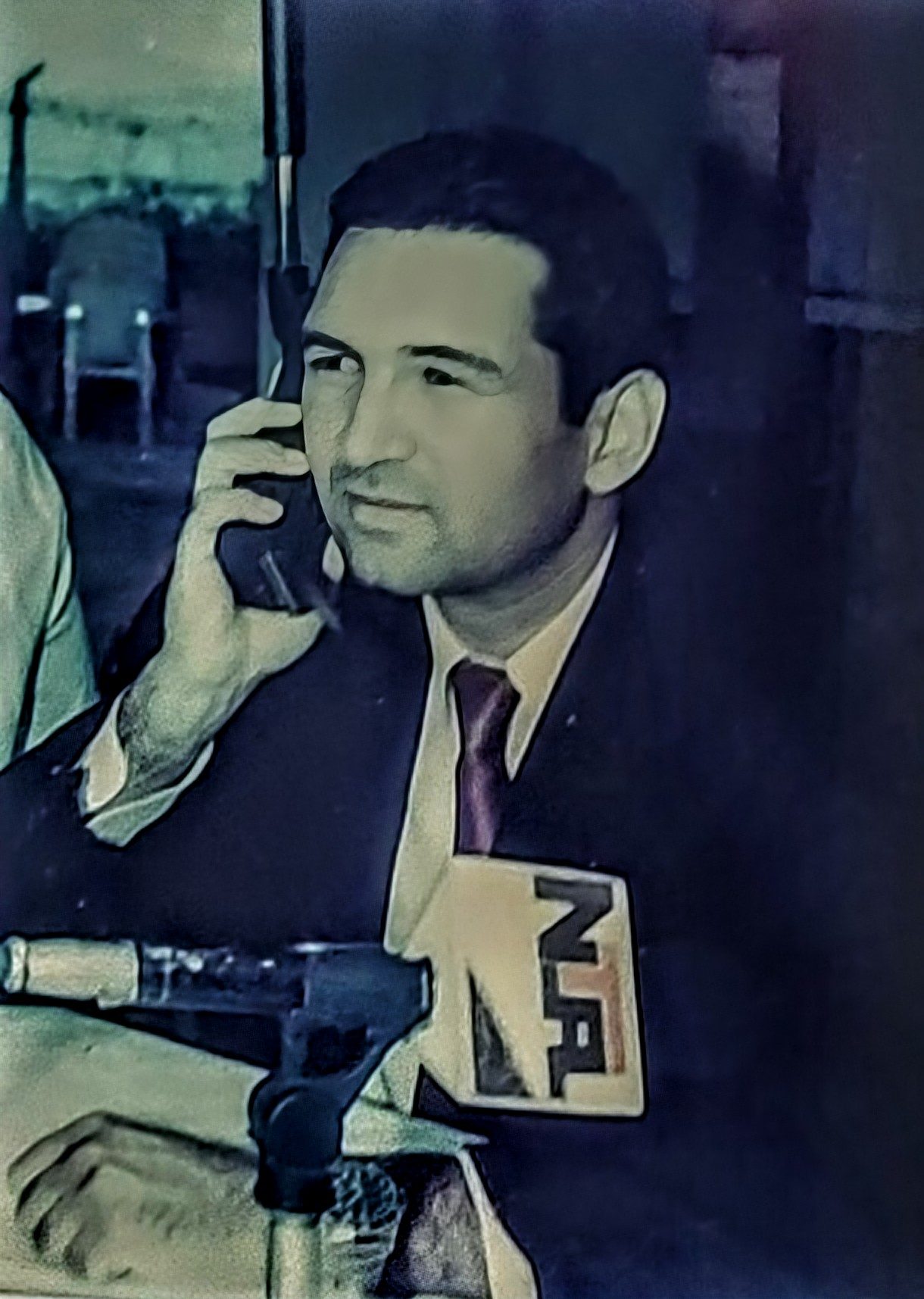
Lagos, 1998. The call that connected perfectly.
Nine months later, Iridium filed for bankruptcy. Sixty-six satellites. Five billion dollars. The most sophisticated telecommunications infrastructure ever built. Gone. Just like that. I remember thinking: what the fuck just happened.
Sixty-six satellites. $5 billion in investment. The most sophisticated consumer telecommunications infrastructure ever built to that point. The surface layer said: this changes everything. The technology layer said: it works. The deep structural layer said: not at this price, not for this market, not with handsets this size, not in a world where mobile networks are about to make this irrelevant. The formation wasn't ready. And the formation's unreadiness was completely invisible to everyone who was watching the technology work.
I spent the twelve years after Iridium selling the communications stack that the next generation of military technology now runs on — across Africa, across the Middle East, in exactly the markets where Iridium failed. I know what those markets do to mesh networks on day ninety. I know the difference between technology that works in a demonstration and technology that works in terrain. That knowledge came from watching Iridium work perfectly and fail completely, and then spending a decade in the exact terrain where it failed.
I tell you this story because it is the most important thing I can say about artificial intelligence in this book: the question is never whether the technology works. Iridium worked. The question is whether the formation beneath it — the economic conditions, the infrastructure dependencies, the human behaviours, the institutional requirements — can support it at the scale and in the markets where it is being proposed.
Here is my honest reading of the AI formation, from what I've built, used, tested, and observed: AI is not the strategy. AI is the new ground condition — the new infrastructure through which all strategies must now be executed. Just as no serious operator in 1995 had an "internet strategy" separate from their actual commercial strategy, no serious operator today should have an "AI strategy" separate from their actual strategy. The AI is the medium. The strategy is the message. And the message is what it has always been: read the terrain, find your angle of advantage, build with full commitment.
The people AI will amplify most powerfully are those who bring to it what it cannot produce: relationships built over decades, positional insights from physical presence in specific geographies at specific moments, trust and credibility that cannot be digitised, and the deep-stratum reading capability that turns raw information into genuine strategic insight. If you have these things, AI multiplies them. If you're building them, AI accelerates the building. There has never been a better time to be a person who brings genuine intelligence to a tool of extraordinary power.
Iridium was too early. The technology worked. The formation beneath it — the pricing, the device size, the infrastructure dependencies, the competitive emergence of terrestrial mobile networks — was not ready to support it at the scale and in the markets where it was proposed. Too early is not wrong. Too early is right, at the wrong moment, which produces the same commercial outcome as wrong while being a fundamentally different thing.
I have been too early three times in my commercial life. I want to name all three, because the pattern they form is itself a doctrine — and because the honest examination of early arrival is more useful than the self-protective silence that most people maintain about their failures.
The first: tantalite. Uganda, 1989 to 1994. I was trading columbite-tantalite — what the world would later call coltan — from artisanal miners in Uganda, Rwanda, and Zaire, paying in local currency, earning in dollars, running a beneficiation operation, connecting a supply chain that had no formal commercial infrastructure to international buyers who had modest industrial demand for the mineral. I left in 1994. Five years later, the mobile phone boom sent tantalite prices multiplying nearly tenfold. The mineral I had been cleaning and exporting became the most contested commodity on earth, the subject of UN investigations, international legislation, and wars that killed hundreds of thousands of people. The formation was correct. The timing was five years early.
The second: drones. After leaving Motorola in 2008, I started a business called 2flyplanes — manufacturing low-cost flight simulators. Operations ran at Cuatro Vientos airport in Madrid, Spain. During that period, around 2009 and 2010, we developed a small drone running on an electric motor. Functional. Working. Real. We never went into full production. The business eventually failed. The global drone market today — defence, logistics, agriculture, surveillance, inspection, delivery — is worth hundreds of billions of dollars and is among the most disruptive technology sectors in the world. We had a working prototype at a Madrid airport eleven years before the market became what it is. The formation was correct. The timing was a decade early.
The third: mPesa. I was shown the beta version by Michael Joseph at Safaricom in 2006. I didn't understand a word. That is not being too early — that is being exactly on time and failing to read what was in front of me. I include it here because it belongs to the same cluster of experiences: the deep structural force was present, the formation was readable, and I did not read it correctly. Different failure mode. Same outcome.
Three instances. Two of genuine early arrival. One of presence without perception. The pattern they form is this: the person who reads the third stratum — the deep structural force — will consistently arrive before the surface layer has caught up. That early arrival is not a design flaw. It is the direct consequence of reading below the surface. The formation moves slowly. The market moves faster, but still slowly. The person who reads the formation earliest pays the specific price of the gap between the reading and the world's arrival.
There is no solution to this. There is only the honest acknowledgment that early arrival and wrong arrival look identical from the outside, and that the person who was early knows — sometimes immediately, sometimes only years later — that what they were doing was correct and the world simply hadn't moved far enough yet to meet it.
Tantalite became coltan. The drone market became what we now see. mPesa became the financial infrastructure for hundreds of millions of people. The readings were correct. The timing was the variable.
If you find yourself in a position that looks like failure but feels like early arrival — sit with that feeling honestly. Ask the formation question, not the market question. The market says: this didn't work. The formation says: was the deep structural force real? Was the timing the only variable? If the answer to both is yes, you were not wrong. You were early. And being early is the specific, costly, honourable consequence of reading the formation correctly before the world is ready for you to be right.
I've been an advisor. I've hired advisors who changed the trajectory of what I was building. I've also hired advisors who provided expensive validation of things I already knew. The distinction is worth naming clearly.
The genuinely valuable advisor has done, in the same conditions, what you're trying to do — not studied it, not advised others on it, but done it, with their own capital or reputation at risk. They'll tell you when your approach is wrong, even when that honesty is uncomfortable and even when their commercial interest would be better served by affirming your existing direction. And they understand their role: to sharpen your thinking, not replace it. The advisor who gives you the answer is worth less than a good book. The advisor who helps you find the answer yourself is worth every conversation.
The critical requirement: you must have enough mastery of your own terrain to evaluate the quality of advisory input. You can get help reading specific layers. But the integration of those layer readings into a coherent strategic position must be done by you — with the full weight of your experience, your relationships, and your genuine understanding of what you're trying to build. No exception, no workaround. The strategy that comes from your genuine understanding of your terrain, shaped and sharpened by good advisors, is always stronger than the strategy that comes primarily from theirs.
A first-class BSc in Geochemistry from Queen Mary, University of London — the Drapers' Prize. Postgraduate work in Canada and Australia. These opened doors. They gave me a vocabulary for complex systems that has served me across every domain I've entered. Let me be honest about what they didn't give me, because the honesty is more instructive than the credential.
And let me be honest about how Australia happened. Because the story of how credentials are chosen is rarely as strategic as the CV makes it appear. I chose to apply to Australia for my doctoral programme because the English weather was terrible and Neighbours — the Australian soap opera — was playing on television and it looked warm and pleasant. That is the complete explanation. The credential that opened doors across forty countries of commercial activity in Africa and the Indian Ocean was chosen because of a television programme about people in Melbourne having uncomplicated lives in the sunshine.
The map was chosen by the weather. The territory turned out to contain everything. The credential opened the doors. None of that changes the fact that the decision itself was made by a young man who was cold and had been watching too much Australian television.
Credentials are maps. They are drawn before you arrive. They open doors you did not know existed and close others you were never going to open anyway. How you choose them matters far less than what you do with them once the door is open and you are standing in the actual territory with the map in your hand and everything the map didn't draw in front of you.
They didn't give me the ability to read people — that came from decades across tables from people deciding whether to trust me. They didn't give me the ability to originate — that came from geological pattern recognition combined with the specific intellectual courage willing to name something before anyone else has given it a name. They didn't give me the ability to sell — that came from the years I spent taking Motorola's radio business across Africa from zero to fifty million dollars as a small team, when there was no playbook and the only tool I had was the clarity of my conviction about what I was offering and why it was worth having.
Your credentials — formal or informal, traditional or unconventional — are the map. Use them. Honour them. They matter. And then go into the territory with your full attention and your full intelligence, because the territory contains wonders that the map, however beautifully drawn, has never seen. Those wonders are yours to discover. No credential is required to enter. Only the willingness to look.
Which brings me to a question the critic always asks about this method: can it be taught? Or is it only available to the person who was expelled from their country at seven, who has forty years of high-stakes terrain behind them, who was trained in a discipline that reads invisible histories from visible evidence?
The honest answer is that the formation of the person matters — and that specific formation is not reproducible. But the capacity to read terrain is not unique to that formation. It is a trainable skill, available to anyone willing to do the specific work it requires. Here is what that work looks like.
The 22-year-old analyst in London who wants to learn to read rooms begins with one discipline: curiosity about what is not being said. Not about what is said — that is the surface, and it is the natural focus of every formal education. The training is in the gap. Before every significant conversation, they ask: what would this person never say aloud in this setting, and why? After every significant conversation, they ask: what changed in the room that I did not anticipate, and what was I missing that would have allowed me to anticipate it? These two questions, practised consistently across months, develop the muscle. Not instantly. Not from a framework alone. From accumulated reps of genuine attention paid to the thing beneath the thing.
The senior person who wants to build this capability into a team looks for a different thing in hiring: not the candidate who has the right answers, but the candidate who asks the right questions. Who notices what others walk past. Who is genuinely curious about the person across the table rather than primarily interested in what that person can do for them. These are not personality traits you install. They are orientations you select for — and then create an environment that rewards. The team that shares its misreadings openly, that treats a failed reading as a learning to be distributed rather than a failure to be hidden, becomes over time a team that reads better than any individual in it could read alone.
You do not need to have been expelled from your country to learn this. You need to be willing to arrive in every room as if you haven't been there before. That willingness — genuine, practised, renewed daily — is the whole of it.
These questions invite you to examine the thinking you've borrowed — and to discover what original insight is waiting to be recognised, trusted, and acted on.
Name it honestly. Then ask: what does my terrain have in common with the conditions that produced this framework? And what is genuinely different? The differences tell you where to adapt.
This is the question to sit with longest. Something you've noticed, something that strikes you as important, that you haven't yet trusted enough to act on. Write it down. It may be the most valuable thing in this book.
Not someone who agrees with you. Someone who genuinely cares about what you're building and is honest enough to say when they think you're wrong. If you can't name them, finding such a person is a high-priority action.
Not a technical question — a strategic one. Is AI currently amplifying your genuine strengths? Or is it being used primarily for tasks that don't play to those strengths? What one change would make the most difference?
Void
A note on register
This scroll moves differently from the first four. Ground, Water, Fire, and Wind are disciplines of perception and execution — they prepare you for the room. Void goes to what is already present before any room, any deal, any outcome. The change of register is intentional. It is not a departure from the method. It is its foundation — the layer beneath all other layers. The talcum powder bottles and the thermonuclear warhead and the Johannesburg silence all came from here. You have been reading about this layer since the first page. This scroll simply names it.
Motorola's headquarters had asked me to fly from Johannesburg to Washington DC to present to an African head of state who was visiting the United States. I flew in carrying the jet lag of a ten-hour overnight flight and the specific alertness of someone who knows the next meeting cannot be rescheduled.
That morning, in my hotel room at the Mayflower, my phone rang. It was Pam — my wife, calling from Johannesburg. She had been in a car accident. The line was bad. The distance was enormous. The details were unclear. I did not know, in that moment, whether she was seriously hurt. I did not know anything except that she was on the other end of a poor connection, thousands of miles away, and I was due in a room with a head of state in less than an hour.
I sat with that for a moment. Not managing it. Not containing it. Just sitting with it fully, in the awareness that has been trained, over thirty years of practice, to remain steady beneath whatever is placed on top of it. The fear was real. The love behind the fear was real. The practice did not make either of them smaller. It simply held them without being consumed by them.
I walked into the meeting. The head of state asked me, before I had presented a single slide, how long my presentation would be.
I told him it could be as long or as short as his time allowed.
He looked at me. Then he said: Patel, you have ten minutes.
He used my name. Heads of state in formal meetings do not use your name like that unless something in the first exchange has already decided how they feel about you. What decided it was eleven words that could only have been spoken by someone with no personal agenda in the room — someone genuinely, completely there for the other person and not for themselves. The jet lag was there. The fear for Pam was there, sitting underneath everything, unresolved. None of it was visible. All of it was, somehow, present in the room as a quality of attention rather than a source of distraction.
I went into a flow state.
Here is what I remember of those ten minutes, because the judge of whether the practice works is not the doctrine — it is the specific quality of what happened in that room.
As I presented, I became aware of something in my peripheral vision. The doorway. The corridor leading to the meeting room. It was lined with people — his security detail, and what I recognised as US Secret Service personnel — standing in the doorway and the corridor, listening. Not protecting. Listening. These were professional men and women whose job is to remain alert to physical threat and operationally neutral to everything else. They were paying attention to the presentation.
I tried not to get distracted by this. I succeeded, mostly.
The head of state, meanwhile, appeared to be only partially present. That is the most accurate description I can give of how he seemed during the presentation itself. He looked at times as if his attention was elsewhere. As if the meeting was something to be endured rather than engaged with. As if his ten minutes had already been assigned in his mind to something more important than what I was saying.
Then the Q&A began. He grilled me. Thoroughly. Precisely. With the specific quality of attention that only comes from someone who has been listening to every word you said while appearing not to. The questions were sharp. They went to the exact technical and strategic vulnerabilities in what I had presented. They demonstrated a level of engagement that the surface of his demeanour during the presentation had completely concealed.
I want to sit with this for a moment because it is one of the most instructive things I have experienced in forty years of commercial meetings.
The surface layer said: he is bored, he is distracted, this is not landing. The second stratum said: his security detail is in the corridor listening — which means the people responsible for his safety have judged this worth their attention. The third stratum said: the person who appears most disengaged in any room is often reading it more carefully than anyone else in it. The performance of disinterest is itself a kind of attention — a way of observing without revealing that you are observing.
I had presented to him in a flow state produced by the practice, by thirty minutes of quiet that morning, by the specific equanimity of a person who had sat with not knowing whether his wife was seriously hurt and walked through the door anyway. And what that flow state produced was not just a good presentation. It produced the specific quality of presence that a person who reads people for a living — a head of state who has survived and succeeded in one of the most demanding political environments on earth — recognised immediately as the real thing.
He used my name. He grilled me thoroughly. He invited me to visit the country and make further presentations.
Pam was fine. It was a minor accident. The distance and the bad connection had amplified everything into something it turned out not to be. When I spoke to her properly that evening, I felt the specific relief of a weight lifting that I had not fully acknowledged carrying.
I have thought about that morning many times. Not about the meeting — the meeting was a consequence. About the moment in the hotel room when I sat with not knowing whether my wife was seriously hurt, and walked into the room anyway, and was somehow more present in that room than I have been in almost any other.
That is not strategy. Strategy would have told me to cancel, or to postpone, or to call the office and explain the circumstances. Strategy operates in the mind. What walked into the Mayflower Hotel that morning operated at a level deeper than the mind — at the level of the practice, the bedrock, the thing that Idi Amin could not expel and a bad phone line from Johannesburg could not shake.
This scroll is about that level. What it is, how to reach it, and why it is the most commercially significant discovery available to any person willing to look for it.
I want to start with what the inner practice produces commercially — concretely, specifically — because if I start with the philosophy, I'll lose some of the people who need this scroll most. Those are the people who've built remarkable things from the outside in and are starting to sense, with the particular exhaustion of sustained high performance, that something essential has not yet been tapped.
Here is what four decades of a specific inner discipline has produced in my commercial life.
I close deals that seem unlikely on paper — not because I'm smarter or better prepared than the competition — but because I'm genuinely at peace with the possibility of not closing them. This is not an attitude I perform. It is a state I've developed, through years of practice, that is now as natural as breathing. The person across from me feels it without knowing what they're feeling. They feel someone who isn't desperate. In a world saturated with desperation dressed as confidence, genuine peace is immediately, viscerally recognisable. It changes the dynamic of every room.
I make faster decisions with less information and am right more often than the preparation time alone would predict. Not because I process information faster. Because I've reduced the noise in my system. The anxiety, the self-protection, the management of the gap between who I am and who I'm performing — all of this competes with clear seeing. When it's reduced — not eliminated, reduced — the terrain becomes clearer. The right move becomes visible sooner.
The relationships in my commercial life are deeper and more durable than any metric of conventional networking would predict. People I worked with once, twenty years ago, are relationships I can activate today. This is not the product of charm or memory. It is the product of genuine interest in other people — interest that cannot be manufactured, that grows naturally from a practice that has been, slowly and consistently, reducing the grip of ego on every interaction, and making the attention previously consumed by self-concern available for genuine attention to others.
These are the results. The practice that produces them is available to everyone reading this book, right now, starting today.
But I want to make the argument more precisely than I usually do — because the sceptical reader deserves it, and because stating a conclusion without arguing the mechanism is not honest thinking.
Here is the mechanism. The Vedantic practice — at its core, the daily discipline of sitting with awareness itself rather than with the contents of awareness — produces one primary cognitive change: it reduces the grip of the self-referential loop. The loop is the continuous background process by which the mind checks incoming information against the question "what does this mean for me?" — for my status, my security, my self-image, my outcome. This loop runs continuously in most people, beneath conscious awareness, consuming a portion of the available processing capacity at every moment.
What the practice does, over years of consistent application, is not eliminate the loop — it cannot and should not — but reduce its dominance. The effect is measurable in the room. The person whose self-referential loop is quieter sees more of what is actually there. They are less subject to the confirmation bias that comes from needing a specific outcome. They process the signals the other person is sending — the quality of the silence, the micro-shift in posture, the thing said differently the second time — with less distortion from their own needs. This is not mysticism. It is signal-to-noise physics. When your noise is lower, your signal resolution is higher.
The equanimity that the practice produces is not the equanimity of not caring. It is the equanimity of having located something in yourself that is not threatened by the outcome of this particular conversation — and therefore does not need to protect itself, and therefore can be fully present to what is actually happening. That presence is what the person across the table reads, accurately, as confidence. It is not performed. It cannot be performed. The room always knows the difference.
That is the mechanism. Thirty years of daily practice is how I developed reliable access to it. But the access is available to anyone willing to sit still long enough to begin.
The most productive discovery of my commercial life did not come from a market, a mentor, or a model. It came from thirty years of sitting quietly and asking the most fundamental question available to any conscious being: what am I, beneath everything I have accumulated? The answer to that question is the source of every quality in this scroll — and of every quality in the first four scrolls that cannot be produced by technique alone.
Every geological formation, no matter how complex, no matter how many strata it contains, no matter how much pressure and heat and time have shaped it — rests on bedrock. The layer that has never moved. The layer that cannot be eroded or displaced by anything above it. Everything else, however solid it appears, is ultimately supported by this.
The Advaita Vedanta teaching I've practised for thirty years — rooted in the lineage of Shirdi Sai Baba and Sathya Sai Baba — is, at its simplest, the recognition of this bedrock in human experience. The individual self — the self with ambitions, fears, strategies, identities, victories, and setbacks — is real. But it is not the deepest thing that you are. Real the way a wave is real: it has shape, force, beauty, consequence. But it doesn't have an existence separate from the ocean it temporarily is.
I want to be honest about where I first encountered this truth. Not in a temple. Not in a philosophy text. Not in thirty years of Vedantic practice, though the practice gave it language and method and depth. I first encountered it in a detention centre in Feltham, England, in September 1972, when I was seven years old.
I had been expelled from my country of birth. I had crossed an ocean on a plane without a visa. I had been separated from my father for what would become two years. I had been placed, with my mother and brother, in a government detention facility while Britain decided what to do with us. And that evening, in the common room, I watched myself on the BBC news broadcast. A fellow detainee recognised me. There was a small commotion of delight.
It was fun.
I have thought about that word for fifty years. Not brave. Not resilient. Not making the best of things. Fun. Because at seven years old, in those specific circumstances, I was completely, genuinely, fully present to the extraordinary nature of what was actually happening — without the weight of what had been lost, without the fear of what was coming, without any of the adult machinery of anxiety and self-protection that would develop later and that thirty years of practice would slowly, steadily reduce.
The bedrock was simply there. Naturally. Before I had language for it. Before I had practice for it. Before I had any framework whatsoever for understanding it. It was there because it is always there — in everyone — and children, who have not yet built the layers of constructed identity above it, sometimes simply live in it without knowing they are doing something remarkable.
Sathya Sai Baba gave me the language. The thirty years of practice gave me reliable access. But the initial recognition — the first contact with the thing that displacement cannot touch, the thing that Idi Amin could not expel, the thing that a detention centre cannot contain — that happened at seven years old in Feltham. Before the doctrine. Before the discipline. Before everything.
And then there was Khartoum.
Before Uganda. Before Motorola. Before forty countries and four languages and a diplomatic credential. Still a student. I was on a Sudan Airways flight from Nairobi to London — a journey that, in the way of African air travel of that era, had already made an unscheduled stop in Juba, where all passengers were required to disembark, identify their luggage from the hold at the plane side, and reboard. This had taken some time. By the time we landed in Khartoum, I was bored and tired.
We were told to disembark into the terminal hall. I walked past immigration and then past customs. Then through the exit of the terminal building and outside into Khartoum.
I looked around. There was not very much to see at that particular angle of Khartoum airport in the middle of a transit stop. I looked at it for a reasonable amount of time. Then I walked back inside, through customs, through immigration, back to the holding area, and reboarded the plane when the time came.
Nobody stopped me going out. Nobody stopped me coming back in. I don't think anyone noticed. I had simply walked through the parts of an airport that are designated as one-directional, in both directions, because I was bored and curious and it seemed like the obvious thing to do.
Sudan Airways had the best inflight juice I have ever tasted.
I include this story because of what it reveals about when the bedrock was already present. This was not the product of thirty years of Vedantic practice. This was not the product of forty years of commercial experience producing equanimity under pressure. This was a student on a delayed flight who walked outside an airport in Khartoum to have a look and then came back in, whose primary and most vivid memory of the entire episode is the quality of the juice.
That is the bedrock. Not performing composure. Not managing a difficult situation with practised calm. Simply being so genuinely at peace with whatever the circumstances happen to be that walking out of a Sudanese airport exit and back in again registers as no more or less significant than it actually was — which is: mildly interesting, briefly diverting, entirely unremarkable.
The practice deepened it. The doctrine named it. But it was already there, fully formed, expressed as a look at the outside of Khartoum airport and an accurate assessment of the inflight juice.
You don't develop the bedrock. You discover it. Usually in a moment when the situation is more unusual than your response to it.
And then, sometimes, you discover its limits. Or what you think might be its limits. And you find out what is actually beneath the bedrock when everything above it is under pressure.
Somewhere south of Johannesburg. A Harmony Gold mine. I went down with a team to look at Motorola radio equipment being used in the underground operations — the specific communications infrastructure that keeps a working mine connected across its extraordinary vertical depth. We went down in a double-decker lift. One hundred people. The cage descended.
We reached 3,600 metres.
I want to try to describe what 3,600 metres underground looks like, because no description I have read has captured it accurately. It is not dark in the way a room is dark with the lights off. It is dark in the way that the absence of any light source whatsoever produces darkness — a darkness that is total, physical, absolute, that your eyes do not adjust to because there is nothing for them to adjust to. The only illumination is what you bring with you. We brought lamps. The lamps made small islands of visibility in something that had no interest in being visible.
At 3,600 metres there was a dual-lane road. A railway track. A ventilation system recirculating air constantly against the heat that accumulates at that depth. A small operational town, running twenty-four hours, with the specific focused energy of people doing essential and dangerous work in conditions that most of the world will never see and cannot adequately imagine. We got into a utility vehicle and drove further down.
From 3,600 to 3,900 metres, where we reached the actual mining area. Hundreds of workers with lamps on their helmets, drilling at the rock face in the specific darkness of the deepest accessible point of the earth's surface. The noise. The heat. The weight of everything above — 3,900 metres of rock, pressing down on the tunnel that was the only thing between those workers and the full consequence of where they were. No escape route if the rock moved. No exit that would operate at the speed that would be required. Just the work, and the people doing it, and the darkness around them broken only by the small circles of their lamps moving across the face.
I have never been more frightened in my life.
Not the mild alertness of an unfamiliar situation. Not the managed concern of someone assessing risk professionally. Genuine, deep, physical fear — the specific fear of a person who has understood, in their body rather than their mind, that they are in a place where the normal parameters of safety and escape do not apply. Any roof collapse. No exit. Those are not abstract propositions at 3,900 metres. They are the physical reality of the space you are standing in.
I kept everything well hidden. Not one person in that group knew what I was feeling. I looked at the equipment. I asked the right questions. I observed the operations with the specific attentiveness of someone doing their professional job correctly. I gave nothing away.
I include this story in the Void scroll not because it demonstrates the bedrock holding — I genuinely don't know whether it held or whether I was simply performing composure while something much less composed was happening underneath. I include it because it is the honest picture of what the Void principle actually looks like in practice, in a human being, under real conditions.
The bedrock is not the absence of fear. It is what holds beneath the fear. At 3,900 metres I was afraid. The bedrock held not by eliminating the fear but by giving me something beneath it to stand on while the fear did whatever it needed to do. The work got done. The questions got asked. The equipment was assessed. And the fear, which was real and admitted to nobody, was simply another layer of the formation — present, noted, and not in charge.
Those workers go down there every day. Twenty-four hours. The bravest people I have ever seen doing the most dangerous work I have ever witnessed. They do not appear to keep their fear well hidden. I think they have simply found, through the repeated experience of going down and coming back up, that the fear is manageable. That the bedrock holds. That the work is worth it.
I came back up in the lift with a hundred people and did not say a word about any of it until now.
But the most extraordinary demonstration of the bedrock in this book is not mine. It is Pam's.
I want to say something about her before the story that most people reach for when they describe her. Because the armed robbery story makes her a monument too, and she is a person. She is the first female photojournalist in Mauritius, which tells you something. She photographs things that other people look past. She has been to places that most photojournalists didn't go — not for the drama, but because the story was there and she thought it deserved to be told. She argues about everything with the specific pleasure of someone who enjoys being wrong because it means she has learned something. She has never once pretended to agree with something she disagreed with, including things I have said, which is one of the reasons I trust her entirely. When she laughs it is real and when she is silent it is also real and you can tell the difference. She met me at a business meeting and stayed for a life, and I have never once been able to fully explain to myself or to anyone else how fortunate that is.
This is the woman who told the armed robbers to watch their language. The same woman. The photographs and the arguments and the silence and the laugh and the reading of a room of armed men with two children in it — all of it is the same formation. The bedrock that cannot be touched is available to anyone. Pam simply never lost access to it.
July 2010. The FIFA World Cup had just finished in South Africa. Ten years I had lived there — ten genuinely wonderful years, building, working, raising a family. We had two young children. The country had given us a great deal and we had given it what we could in return.
That night, armed men came into our house.
They took everything. Electronics, valuables, everything of material worth in the building. They were armed and they were in our home and they were swearing — the specific profanity of men in a situation of complete power who have decided that restraint is unnecessary.
Pam told them to watch their language.
In front of the children. Directly. Without hesitation. Armed men who needed no excuse to do worse than steal — she gave them a reason to be angry, in that room, with her children present.
They didn't need any excuses to kill. She didn't calculate the risk. She simply responded from exactly who she is — the first female photojournalist in Mauritius, a woman who had spent her career walking into rooms where she wasn't expected, holding her ground in a male-dominated world, being completely and fully herself in situations designed to make her smaller.
They left. They took the things. They left the lives.
I have thought about that moment many times since. Not primarily with fear — though the fear was real and came later, when it was safe to feel it. With recognition. Because what Pam demonstrated in that room is the same thing Pramila demonstrated at Entebbe Airport in 1972. The same bedrock. The same absolute refusal to be defined by the circumstances. The same complete presence in the moment that produces not recklessness but the specific clarity of someone who is not spending any part of their attention on managing their own fear.
The formation of Pramila and the formation of Pam are the same formation. One packed gold jewellery into talcum powder bottles with two children and no visas and got her family onto a plane. The other told armed robbers to watch their language with two children in the room.
Both of them operating from the same bedrock. The thing that guns cannot remove. The thing that circumstances cannot define. The thing that was present at Feltham at age seven, in Khartoum as a student, at 3,900 metres underground in a Harmony Gold mine — and in a house in South Africa in July 2010 when everything was being taken except the lives.
Within three months, we left South Africa. We moved to Mauritius. We have never regretted it for a single day.
It is available to you now. It was always available to you. It does not require thirty years of practice, though practice deepens it. It requires only the willingness to be genuinely still, for a moment, and to notice what remains when the noise subsides.
What remains is the bedrock. It has been there all along.
Beneath the wave — beneath the self with all its strategies and experiences — is something that doesn't fluctuate. Something that is not affected by any commercial outcome, any personal loss, any success or failure. This is the bedrock. And here is the extraordinary commercial consequence of recognising it:
The person who knows — not intellectually, but in the body, in the moment of pressure — that their deepest identity is not at stake in any commercial outcome, operates from a completely different position than the person who doesn't. They can wait. They can walk. They can say what's true instead of what they think the other party wants to hear. They can acknowledge uncertainty and limitation without it costing them their authority. They can be wrong without it costing them their identity. They can lose without it costing them their direction.
These are not small advantages. These are structural. And they compound across a career in ways that are difficult to model but impossible to miss when you observe them in practice.
Non-attachment is the most misunderstood concept in the Vedantic tradition, and I want to be precise about what it means — because the misunderstanding sends intelligent people either toward dismissal ("I can't afford not to care") or toward performed detachment ("watch how serene I am in this high-stakes situation"), both of which miss the point entirely.
Non-attachment is not the absence of caring. It is the freedom to care completely, without that caring becoming the definition of who you are.
You can want something deeply — a deal, a partnership, a future for your company, a life you've imagined — and simultaneously hold, genuinely and without performance, the possibility that it may not come in the form you're hoping for. Not because you don't care. Because you know, at the level of the bedrock, that what you are is not determined by whether this specific thing happens.
The commercial consequence of this is precise. A negotiator who genuinely doesn't need the deal — not because they're performing detachment but because they've done the inner work that makes the non-attachment real — operates from a completely different position. They can wait. They can walk. They can say what's true instead of what they think the other party wants to hear. This honesty, rooted in genuine non-attachment, builds the kind of trust that no amount of clever positioning can manufacture.
The path to this non-attachment is the practice. The practice is available to everyone. And the starting point is simply this: one moment each day of genuine quiet. Not doing, not planning, not reviewing, not preparing. Just being. Even five minutes. The bedrock forms slowly. But it forms.
Thirty years ago, I began a practice that has no name in any business book. At its simplest: a daily return to the awareness that exists before thought — a period each day of deliberate silence in which the stream of commercial thinking is allowed to run in the background while attention rests in the awareness that underlies it, the way the ocean underlies its own waves.
In my tradition — the teaching of Shirdi Sai Baba and Sathya Sai Baba — this takes a specific form. Prayer, contemplation, the direct inquiry into the nature of consciousness that the Vedantic practice entails. The form is less important than the function: done daily, without exception, with no agenda and no expected output. Simply sitting with what you are, beneath everything you've accumulated.
The effects, accumulated over thirty years, are not subtle. The reduction in reactive decision-making is significant and consistent. The quality of attention available in important conversations is dramatically different from what it was before the practice began. The capacity to hold long-term vision while acting with full presence in the immediate moment has grown steadily.
You don't need thirty years to begin experiencing this. The first week of genuine daily practice produces changes that are immediately observable. The first month produces changes that are commercially measurable. Begin with five minutes. Begin tomorrow. The practice is waiting for you. The quiet that seems empty is not empty at all.
Every person who has built something, earned something, or become known for something faces the same quiet challenge: the temptation to locate their identity in those achievements and titles. This is natural. It's also the source of a specific fragility, because titles change. Achievements age. And when the identity is located in the thing that changes, any change to the thing is experienced as a threat to the self.
I've been the distributor and the diplomat, the founder and the chairman, the consultant and the client. None of these roles changed what I was at the level that actually matters. The label on the stratum changed many times. The stratum itself did not.
The operator who has done the inner work of distinguishing between their identity and their titles responds to changes with full intelligence and genuine equanimity, because nothing existential is at stake. They can hold a title lightly, do its work fully, and release it when the time comes — and find that the release reveals, rather than diminishes, what they actually are.
This is not a small thing. This is the freedom that makes everything else in this book sustainable across a career. You can play the long game — the thirty-year game — only if the inevitable setbacks, transitions, and changes along the way don't break something essential in you. The bedrock makes you unbreakable. Not hard — unbreakable. Hard things shatter. Bedrock simply remains.
The highest form of strategy is not the execution of a plan. It's the alignment of your actions with what you actually are — with the deep stratum of your genuine nature, your real capabilities, your authentic values — such that strategy and being become the same thing.
When this alignment is achieved, there's no performance. No version of yourself for the boardroom and a different one for the café. One person, reading the terrain, acting with the full intelligence of everything they've learned and everything they are, leaving a track record that is consistent across contexts because it comes from a consistent source.
I make decisions faster than I did at thirty because I'm less confused about what I value. I read terrain more accurately than I did at forty because I'm less distracted by what I want the terrain to be. I'm more effective in any room than I was at fifty because I'm no longer managing the gap between the person I am and the person I'm trying to appear to be.
The gap consumed an enormous amount. When it closed, everything that had been diverted into maintaining it became available for the work.
This alignment is available to you. Not at the end of a long journey, not after some distant milestone. It is available in the quality of your attention in your next conversation. In the honesty of your next decision. In the five minutes of quiet you might begin tomorrow morning. Every step toward it makes the next step easier. Every conversation from genuine alignment opens more than a conversation from performance closes. The alignment compounds. Begin where you are.
I want to close the Void Scroll with a statement I've arrived at slowly, across forty years of commercial life. The statement is this: the most durable commercial motivation is service.
Not customer service. Service as the genuine orientation of your energy toward improvement in the situation of the people and institutions you work with — such that the commercial relationship is experienced by both parties as a source of real value, and the work you do is felt, by everyone it touches, as having made something better.
The device rental business was built on the genuine insight that the way Mauritian companies managed their technology assets was costing them more than they'd calculated, and that there was a better way. The Motorola Africa years were built on the genuine belief that connectivity would improve the lives of people across a continent underserved by global technology companies. The Rwanda plays are built on the genuine belief that the infrastructure being built there today will determine the quality of life of millions of people for decades to come.
In every case, the commercial return followed the genuine service. Always. Without exception.
You are not the point. The work is the point. The people the work serves are the point. You are the instrument — the specific, irreplaceable instrument, because no one else has your exact formation of experience, relationship, capability, and position — but the instrument is in service of the music, not the other way around.
When you genuinely know this, everything changes. Not just commercially. Everything. The work becomes more satisfying. The relationships become deeper. The victories, when they come, are shared naturally, because the work was never only yours. And the difficult periods — because there will always be difficult periods — become navigable, because your sense of purpose is rooted in something that the difficult periods cannot touch.
Times are hard right now. For many people, genuinely hard. This book was written precisely for that moment. Not as a distraction from the difficulty, but as a compass through it. The strata are readable. The terrain is navigable. The bedrock beneath everything has not moved. You are more capable than you know. The reading is available. And everything good follows from the willingness to look clearly at what is actually there, and to act from the deepest, truest, most generous version of what you are.
The rock took a long time to form. But it is solid. And it was always yours to stand on.
From a very early age I carried a quiet knowing — not a plan, not a hope, a knowing — that something significant would happen to me at the age of thirty. I could not have told you what it would be. I could not have told you whether it would be good or catastrophic. I simply knew it was coming.
In 1995 I turned thirty. The minerals business was gone. Everything had fallen apart. I had left Africa telling myself I was done with it. I returned to the UK penniless and stayed with my parents. A factory cleaner. Not the trajectory anyone who had known me in Uganda or Australia would have predicted.
A healer named Maria gave me a photograph of Sathya Sai Baba. She said: keep it in your pocket. He will help you. I did. I was that desperate.
Shortly afterwards, he came to me in a dream. Not slowly. He flashed in — a presence, immediate and specific — pointed directly at me and said: come to see me. Then he was gone. I was flummoxed. I had no money. I had no means. I asked Maria what to do. She told me to write him a letter but not post it — to burn it. She said he would know its contents anyway. In the letter I told him I had no money, that if the dream was real he would need to arrange my visit.
I burned the letter.
Sometime in September or October 1995 I went to a travel agent and booked a flight to India for December. Direct flights to Mumbai are almost impossible to get — the volume of diaspora travelling means availability is scarce even when booking months ahead. The travel agent found me a direct flight. He issued the ticket and sent it to me before I had paid for it. I thought it was odd. I paid.
I arrived at Mumbai airport in the early hours of the morning. The customs queue was enormous — hundreds of people, the specific slow density of an international arrivals hall at capacity. A uniformed officer came directly to me. Only to me. He said I could go through. I went through.
The next day I went shopping. I met a Sikh couple from Nairobi. We got talking. When they asked why I was in India and I told them I was going to see Sai Baba, they said: we have just come from seeing him. When you see him, he will stand in front of you. I was disappointed. I had not come to India to watch a holy man walk past in a crowd. He had pointed at me in a dream and said come. I had come. I wanted a conversation. An explanation. Standing in front of someone is not the same as being seen by them.
Then I arrived at Puttaparthi. The first thing to understand about it in 1995 is where it was. Not metaphorically — physically. Seven hours by road from Bangalore. Bumpy, winding, deep interior India, the kind of road that reminds you at every turn that you are far from anything that could be described as convenient. Deep rural. A small town built around an ashram that had grown, over decades, to accommodate what can only be described as a spiritual Disneyland — vast halls, accommodation blocks, a university, a hospital, a water tower, the specific infrastructure of a place that has had to scale to meet a demand it never advertised for.
Because here is the thing that struck me before anything else struck me: the people. Tens of thousands of them. From every country on earth. Argentinians. Colombians. Israelis. Europeans of every nationality. Americans. Africans. Asians. People from every religion — Christians, Muslims, Jews, Hindus, people with no religion at all — sitting in the same space, waiting for the same darshan, drawn by the same force that nobody had announced and nobody had advertised. How did they find out? In 1995 there was no social media. No algorithm serving them Sai Baba content because they had once clicked on something adjacent. No billboards. No television campaigns. And yet they were all here, at the end of seven hours of bad road in deep rural India, tens of thousands of them, from every corner of the earth.

Puttaparthi, December 1995. Floor space shared with a hundred men.
Mosquito netting on the concrete. Rough. Real. The specific conditions of arrival.
I thought about this for a long time in the shed. The shed I had been assigned — floor space shared with a hundred other men, bedding and mosquito netting organised on the concrete, the specific conditions of a place that was rough and real and nothing like what a Western mind would associate with spiritual experience. And in the shed, on one of the days before the darshan, I got talking to an African American gentleman. We talked about what had brought us here, the specific paths that had led to this specific floor in this specific shed in the interior of India.
At some point I asked him directly: is this the right path?
He looked at me without hesitation. Without qualification. Without the careful hedging that most people apply to questions like this.
He said: this is the right path.
Present tense. No hesitation. The specific quality of someone who has already been through the door you are standing outside, who knows what is on the other side, and who has no reason to mislead you and every reason to tell you the truth plainly.
I felt, in that moment, like Neo talking to Morpheus. The man wasn't arguing or explaining or trying to convince me of anything. He was simply reporting what he knew, with the calm authority of direct experience. That is the only kind of authority that cannot be fabricated. You either know or you don't. He knew.
The geometry of my expectation shifted. I had come here disappointed — the Sikh couple in Mumbai had told me he would stand in front of me and I had found that insufficient, because I wanted a conversation, an explanation, something more than a crowd and a small orange figure at a distance. And then I arrived and understood, for the first time, what standing in front of someone in the middle of this — tens of thousands of people from every country on earth, at the end of seven hours of bad road, drawn by something that needed no advertising — actually meant.

Puttaparthi, December 1995. Sathya Sai Baba walking among tens of thousands during darshan.
The author sat in the front row.
The darshan system used tokens. Each line draws a number. The number determines when you enter. My line drew number one. I sat in the front row.
When Sai Baba entered the area he was a small orange speck among a sea of people. When he was approximately fifty metres from me I could not breathe properly. I could not look at him. There was too much energy and power — something that the word energy does not adequately describe, because energy is a neutral term and what was in that space was not neutral. It had a specific quality. A specific weight. As he came closer the tightening in my chest increased and I could not lift my head.
He stood in front of me. I clasped his feet. It seemed like an eternity. It was probably a few seconds.
I have never felt anything like that before or since.
What happened immediately after is a blur. The mind that retains and reports and narrates was not operating in those moments. Something else was. And that something else does not produce memory in the conventional sense. It produces change.
That day, and thereafter, my life changed forever.
The photograph Maria gave me is still in my front right pocket. Today. As I write this. As I have written every word of this book. It was there in Lagos in 1998 when I told the channel partners I would replace them. In Johannesburg when I held the silence. In Washington DC in 2005 when I told the head of state that the presentation could be as long or as short as his time allowed. In Kinshasa when I walked the white line on the apron. In every room, in every country, across every year since December 1995.
I am not asking you to believe what I believe. I am not asking you to interpret these events the way I interpret them. I am simply telling you what happened. The direct flight arranged before I paid. The officer in Mumbai. The Sikh couple from Nairobi. Line number one. The front row. The tightening in my chest at fifty metres. The blur.
And the photograph, still in the pocket. Every day. Every room. Every formation read. Every cut made.
It was always there. December 1995 was simply the moment when I stopped walking past the neighbour's house.
I went back in 1996. A second visit. This time Sai Baba materialised vibhuti — sacred ash — directly for me. Twice. The first time I consumed it and became incredibly ill. The second time I felt changed. Not ill. Changed. The distinction between those two outcomes is something I cannot explain in any framework available to me. I simply report what happened: illness the first time, change the second time, and no adequate language for either.
He came to me again in a dream. He told me to go back. I returned to the UK.
Shortly after, Motorola hired me as a Business Development Manager for Africa — for two-way radios. The continent I had left in 1995 telling myself I was done with it. The continent I had returned from penniless and stayed at my parents' house and cleaned factories and packed boxes to recover from. Motorola looked at my background — the mineral trading years in Uganda, the commercial experience, the languages, the networks — and put me straight back in.
I left Africa never wanting to return. I was put straight back in again.
Looking back, I cannot locate the surprise I apparently should have felt. The formation had already decided. The dream in 1995 came before the job. The trip to Puttaparthi came before the interview. The photograph went into the pocket before the plane ticket to Lagos. The base layer was laid in a specific order, by a specific sequence of events, and the career that followed was built on that base — not the other way around.
I am not asking you to accept any particular interpretation of these events. I am simply telling you the sequence in which they occurred. Draw your own formation reading. Mine is this: the thing that was going to happen at thirty happened at thirty. The crisis, the photo, the dream, the letter burned, the direct flight, the officer in Mumbai, line number one, the blur, the second visit, the materialisation, the second dream, the job. One sequence. One formation. Assembled by forces I cannot fully see, producing a life I could not have planned.
The photograph is still in my pocket. Every day. Every room. Every formation read since December 1995.
I want to say something in this scroll that goes beyond commerce and beyond strategy and beyond anything that can be demonstrated by the geological method. I am going to say it because it is true and because this book is the place where the things not yet fully said get said.
In 1968, Sathya Sai Baba — the teacher whose lineage I have practised for thirty years, the source of the doctrine that underlies the Void scroll — made his first and only journey outside India. The only continent he chose to visit was Africa. He came to East Africa: Kenya, Uganda, Tanzania. Fourteen days.
In Kampala, Uganda, he gave darshan to massive crowds. Among those who received his blessing was the Chief of the Ugandan Army — a tall, energetic military officer who wept when Sai Baba departed. His name was General Idi Amin.
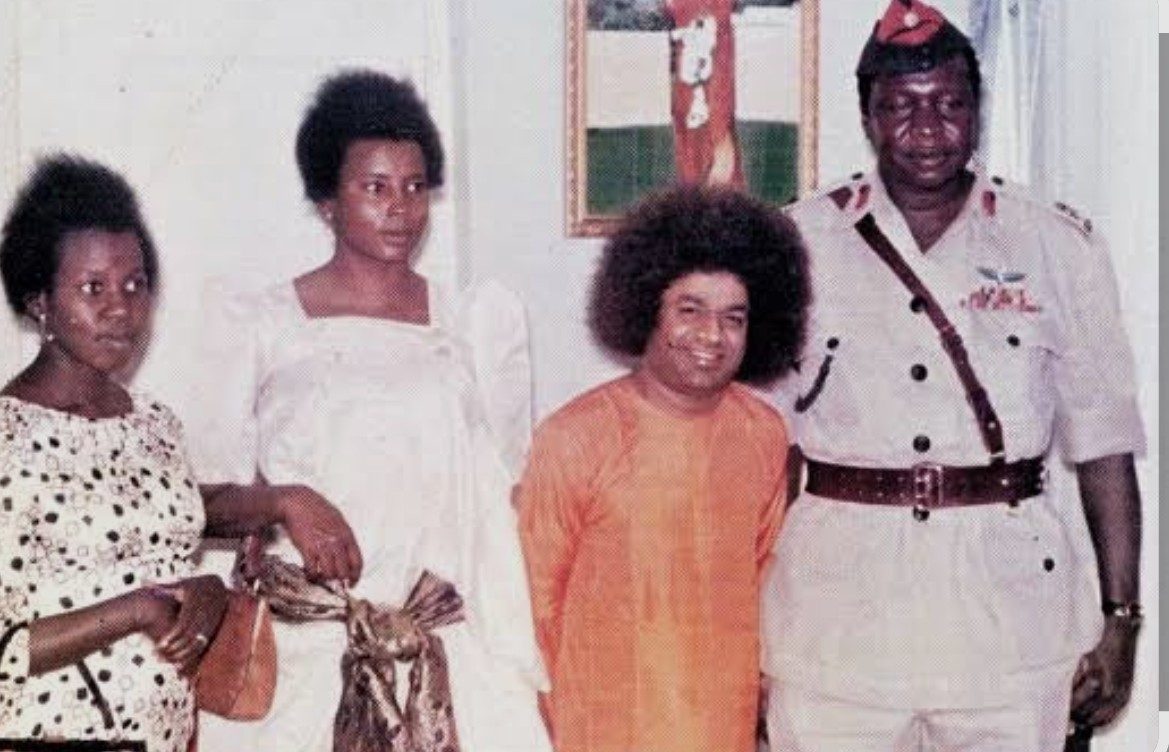
Uganda, 1968. Sathya Sai Baba with Idi Amin and members of his family.
Four years before the expulsion he had already warned the Indian community to leave.
During that visit, Sathya Sai Baba told members of the Indian community in Uganda to make plans to leave. He said that foreigners would be asked to leave in four years' time. This is documented — recorded by named witnesses, Dr. Chotabhai G. Patel and Dr. D.J. Ghadia — in published accounts of that visit. In 1968, Uganda was peaceful. Life was good. The community was established, prosperous, settled. Almost nobody believed him. He was seen, in the community's words, as a magician. A curiosity. A holy man doing extraordinary things, perhaps, but not someone whose specific political warnings should be acted on.
In 1972 — four years later, exactly as he said — Idi Amin expelled the Asian community from Uganda. Ninety days to leave. Five pounds per person. My mother packed gold jewellery into talcum powder bottles. We got on the plane.
I am absolutely convinced — this is my personal conviction, not a documented historical claim — that Sai Baba also told Idi Amin something during that visit. That he told him he would never be killed by human hands. Idi Amin himself spoke of receiving divine instruction — he claimed God came to him in a dream and told him to expel the Asians. Idi Amin died in exile in Saudi Arabia in 2003, of natural causes, unviolated by any human hand. He was not killed. He was not executed. He simply died.
I make no further claim about what this means. I simply note that the man who was told he would not be killed by human hands was not killed by human hands. And that the community that was told to leave in four years did not leave, and was expelled in four years.
Now. The thing that sits heaviest.
During his visit to Kampala, Sathya Sai Baba stayed at the home of Dr. Chotabhai Patel — a family known to the Indian community. A neighbour. Not a stranger. Someone whose house was known, whose address was known, whose invitation was a matter of community knowledge.
My family did not go.
We thought he was a magician. We didn't think the visit was significant enough to walk to the neighbour's house and join the darshan. The man who foresaw the expulsion of the Indian community from Uganda four years before it happened, who tried to warn us, who was at the house next door — we didn't go to see him.
The regret feels heavy even today.
I came to his teaching thirty years later, through a different route, in a different country, in different circumstances. I have practised it for thirty years. It has given me everything described in this scroll — the language for the bedrock, the access to the thing beneath the noise, the specific equanimity that walked into the Mayflower Hotel in 2005 carrying fear for Pam and came out with a head of state using my name.
But the teacher was at the neighbour's house in 1968. He told the community to leave. We didn't listen. We didn't go. And four years later, at Entebbe Airport on a Monday night, my mother read the formation that he had already read — and got her children onto the plane.
The formation was read twice. Once by him, four years before the event, in the neighbour's house. Once by her, at the airport, on the night. Both readings were accurate. Both produced the only correct response to the formation: move.
The third stratum of this book — the deep structural layer beneath the commercial doctrine and beneath the personal biography — is this: the teacher of the practice that makes everything else in the Void scroll possible was in Uganda in 1968. He read the formation. He told the community what he saw. The community that listened, left before the expulsion. The community that didn't listen — including my family — left in ninety days with five pounds and hidden gold.
Read the formation. Whoever is reading it and from wherever they are reading it. When someone who can see the deep structural force tells you what they see — listen. Even if they seem like a magician. Even if the surface layer looks peaceful. Even if the house is just next door and it seems like something you can always do tomorrow.
You cannot always do it tomorrow.
Three slightly irregular horizontal lines, cut by a single heavy diagonal slash. Hand-drawn, deliberately imperfect, because no genuine reading of anything is perfectly straight.
The lines are the layers: surface, established interest, deep structure. Irregular because they've been subjected to pressure and heat and time, and they've bent, and the bends are information. The irregularity is not imprecision. It is accuracy.
The slash is the act of reading — the deliberate cut that exposes what the layers contain. Heavier than the lines because the cut requires more than observation. It requires commitment: the commitment to go beyond what's comfortable, beyond what the surface presents as the complete story, into the formation beneath, where the real information lives.
Three rock layers, one cut. He reads what others walk over.
But the mark is not only mine. It is a way of moving through the world that is available to everyone who reads these pages and chooses to practise what they contain. Every person who develops the capacity to read below the surface — who learns to see the formation beneath the face, the deep structure beneath the established interest, the bedrock beneath everything — carries the mark, in their own irreplaceable way, in the specific terrain only they can read.
The mark is a promise. A promise to look clearly. To cut honestly. To tell what you find. To serve what the finding reveals is needed. To do this with consistency and with care, for as long as you have the privilege of doing it.
All the way down. And all the way through — to the extraordinary thing that was always there, waiting to be read.
These are not business questions. They are questions about who you actually are — which makes them the most commercially significant questions in this book, and also the most personally liberating ones. Sit with each one gently. There is no judgment here. Only discovery.
Naming it is not giving it up. Naming it is the first step toward engaging with it from your full intelligence rather than from the anxiety the attachment creates.
What would it feel like to hold it lightly? What might become possible if you did? The question is not whether to abandon it — it is whether you are carrying it or whether it is carrying you.
If not: what one small change tomorrow morning would create even five minutes? Begin there. Begin tomorrow. The rest follows from that single step.
Write both lists. The destroyed column and the remaining column. The ratio is the measure of where your deepest identity currently lives. And the remaining column is almost always richer than you expect.
The WOWO Field Guide
12 methodologies.
One printable page.
The complete field guide to everything in this book — all 12 methods, the five-question checklist, the borehole table, and the nine principles — formatted to print and keep on your desk.
No spam. No list. One email with your field guide.
A Final Word to the Inheritor
You've read five scrolls in one sitting. Something in you decided to stay with it. I want to honour that before I say anything else — because staying with something, in a world that has engineered every possible alternative form of attention, is itself an act of courage and a signal of seriousness.
If you're reading this and something in the last few hours has shifted — a way of seeing something you hadn't seen before, a name for something you already knew but hadn't articulated, a question that opened rather than closed — then the transmission worked. That is all I intended. Not to give you conclusions, but to give you a more powerful set of questions and a cleaner instrument for answering them.
If you're reading this at the end of a hard period. If the last quarter didn't work, if a partnership fractured, if something you believed in didn't get the response you hoped for — I want to say this directly to you: the capacity to read the terrain is not diminished by a difficult season. It is developed through one. The strata you've lived through are the strata you can now read. The pressure and the heat and the time have not wasted you. They have formed you. Both things are true simultaneously, and both matter.
A word on patience. The formations that contain the most valuable deposits took the longest to form. The relationships that will carry your most significant transactions are being built right now, in conversations that may feel unimportant. The capabilities that will set you apart are accumulating through every experience you're having. You cannot accelerate this. You can only bring full attention to it, every day, and trust that what cannot yet be seen is forming.
A word on honesty. The greatest gift you can give to your own work is the willingness to see it clearly. Every single time I've been willing to see clearly — to drop the story and look at the rock — I've found something more interesting, more workable, more genuinely promising than the story suggested. The truth of the terrain is always richer than the comfortable version of it. Trust the reading.
A word on relationships. At the end of forty years of commerce across two continents, what I value most is not any deal closed or category built or position held. It is the quality and depth of the relationships I've been given the privilege of sustaining. These are the stratum that holds everything else. Invest in them. Honour them. They are not a means to commercial outcomes. They are the outcome.
Now. Here is the one action I want you to take from this book. Not the nine principles. Not the five reflections. One action.
In the next forty-eight hours, go to the terrain you're actually in — the specific market, the specific relationship, the specific situation that is most alive for you right now — and apply the three-layer read to it. Surface. Established interests. Deep structure. Write down what you find at each layer. Write what you hadn't seen before. Write the angle of entry that the full reading reveals.
Then act on that reading. One step. Not the whole plan. The first step that the honest reading makes visible.
That is how the discipline begins. Not with a transformation. With one reading, followed by one action, followed by the honest assessment of what the action revealed. Then the next reading. Then the next action. Forty years of that is what this book contains.
Go to the terrain. Read the layers. Find the angle. Cut.
And when you've done all of that — when you've won what you set out to win and learned from what was taken from you and discovered what the terrain had to teach — find the person standing where you once stood, and give them what I've given you here.
Not the techniques. The way of seeing.
The knowledge that the ground is readable.
And that they — exactly as they are, from exactly where they stand, with exactly what they have — are capable of reading it.
Because here is the thing I most want you to leave with, the thing that underlies every page of these five scrolls: you are more capable than you know. Not in spite of where you've come from. Because of it. The strata you've lived through are the strata you can read. That is not a limitation. That is the most powerful form of expertise available to any person in any field.
The rock took a long time to form.
So did you.
Both of you are ready now.
Three layers. One cut. Go.
And one last thing. Not for the reader. For two people.
Mum — you packed gold jewellery into talcum powder bottles on a Monday night in 1972 and got your children onto a plane to a new life with nothing but five pounds and everything that mattered hidden in plain sight. You read the formation at Entebbe before I had words for what reading the formation meant. You rebuilt a life in a country that was not yours, for two years without your husband, without complaining in a way your children could hear, and with a quality of quiet strength that I have spent forty years trying to understand and will spend the rest of my life grateful for. I know there are things you did that I will never know. I know the only time you were weak was when you lost him. I know you don't read. So I will speak these words to you directly when this book becomes sound — your son's voice, telling you what he has never said plainly enough: you are the first page of everything I have ever built. You are the ground beneath the ground.
Dad — you waited in Nairobi. You waited for two years in your family's city, alone, while your sons grew up in Wales and your wife rebuilt a life in London, and you held on until the formation shifted and you could get through. When we saw you again, the feeling was of completion. I carry that word everywhere I go. Completion. I walk into rooms in Nairobi and I read the terrain and I close the deals and I think of you in that city, waiting. You are in every room I enter there. You always will be. I love you, Dad. I hope the book is good enough.
— Nikesh Patel
Mauritius · Indian Ocean
Honorary Consul · Entrepreneur · Geologist of Commerce
Nikesh Patel was born in Kampala, Uganda, and expelled at age seven when Idi Amin ordered the expulsion of the Asian community in 1972. He arrived at Heathrow Airport with his mother and brother, no visas, and five pounds sterling. He made the BBC news that evening. He found the whole thing genuinely exciting.
He holds a first-class BSc in Geochemistry from Queen Mary, University of London — the Drapers' Prize — with postgraduate work in Canada and Australia. He spent the subsequent four decades doing business across forty countries in Africa, negotiating in four languages, building companies from nothing, and developing the discipline this book contains.
At Motorola he built the radio business across Africa and the Middle East from zero to fifty million dollars as part of a small team, then moved to cellular in 2006 where his team contributed a hundred million dollars to an Africa-wide number of seven hundred and fifty million. He was in the room in Nairobi in 2006 when Michael Joseph showed him the beta version of mPesa. He didn't understand a word. He has been thinking about that ever since.
He is the Honorary Consul of Rwanda in Mauritius, Chairman of MUA Insurance Rwanda, and founder of several ventures across the Indian Ocean and African continent. He lives in Mauritius, where the trade winds come off water that has no memory of anything.
He has maintained a daily inner practice for thirty years. He swears more than this book suggests. He is, as his mother is, as strong as nails.
Three rock layers, one cut — he reads what others walk over.
What Others Walk Over · Nikesh Patel · Mauritius
All rights reserved · First Edition